
EXHIBITIONS

SKELETON-CUTS, LINE by LINE
Richard Nonas

July - September 2019  
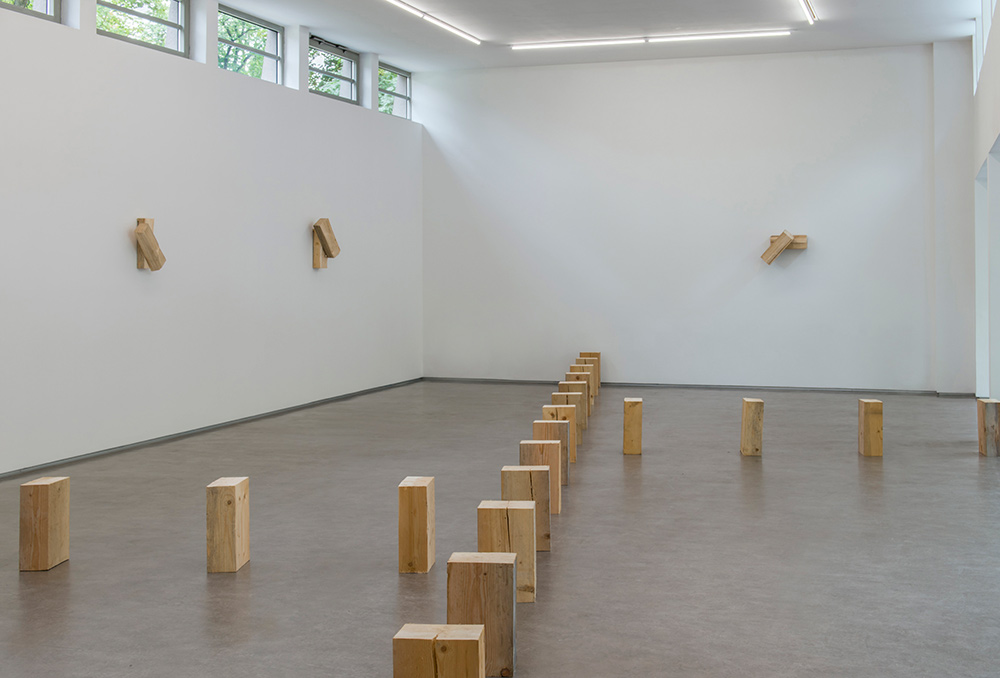
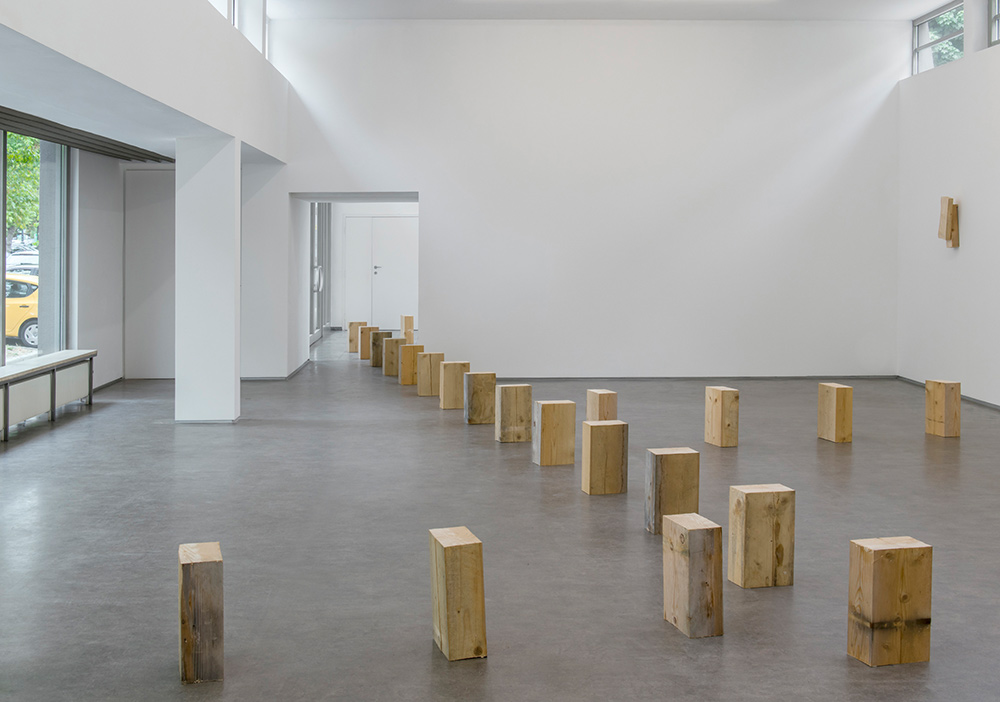
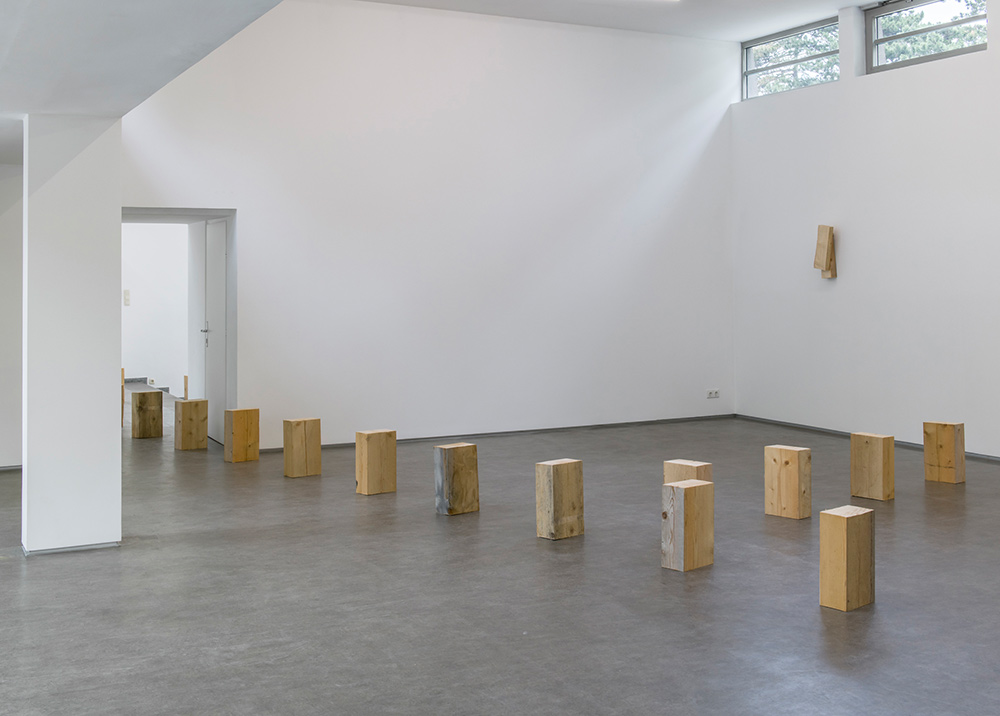
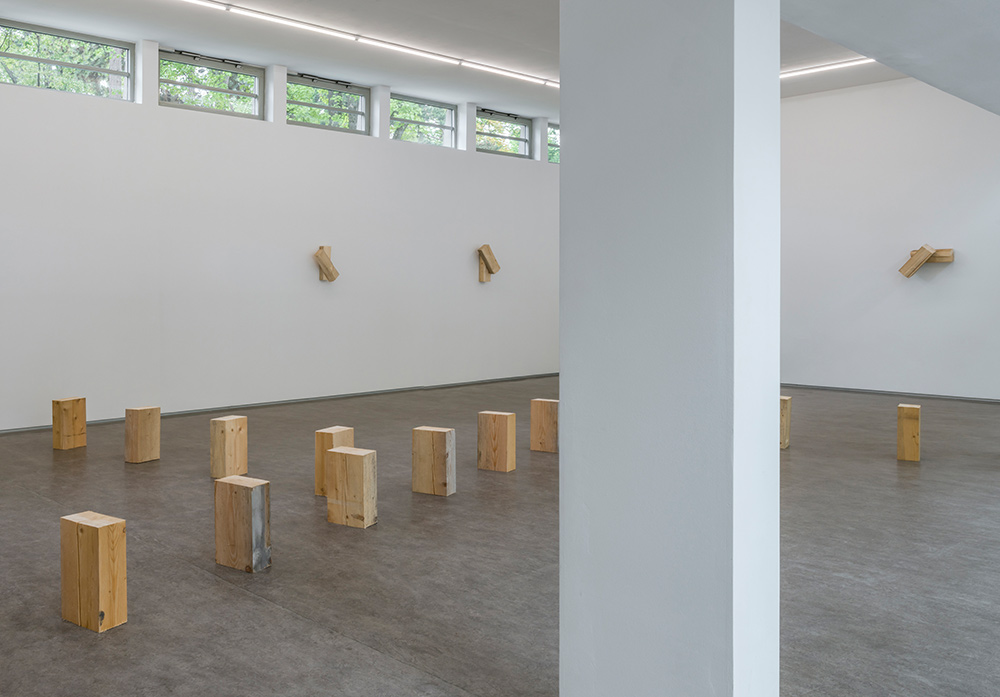
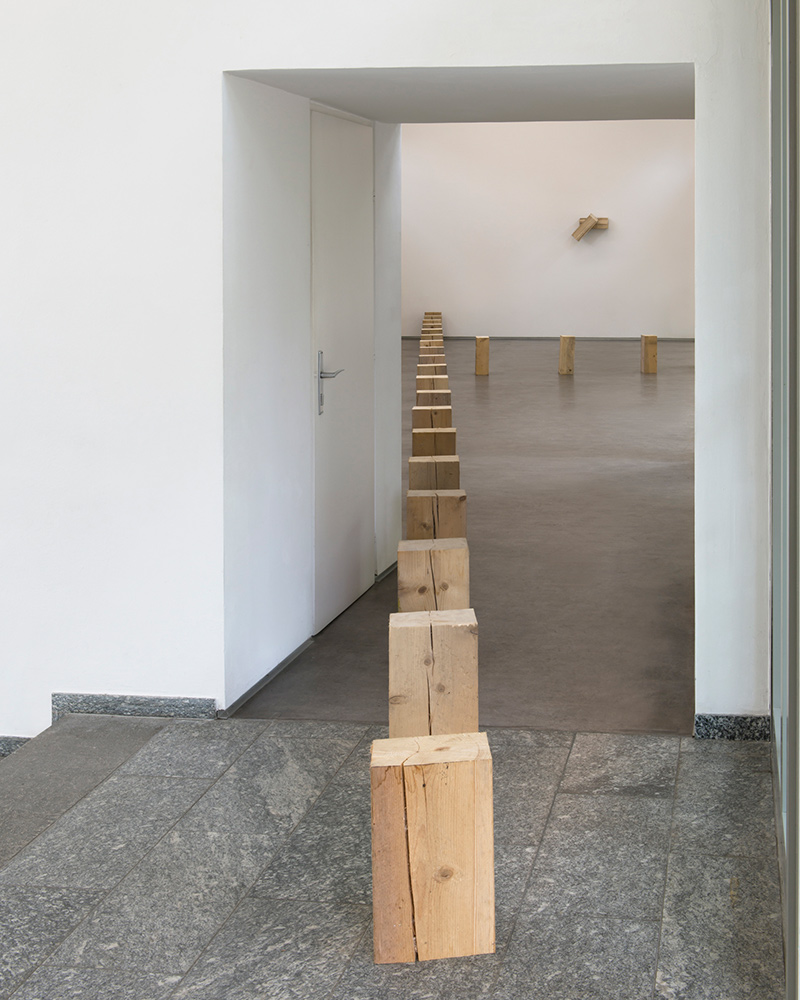
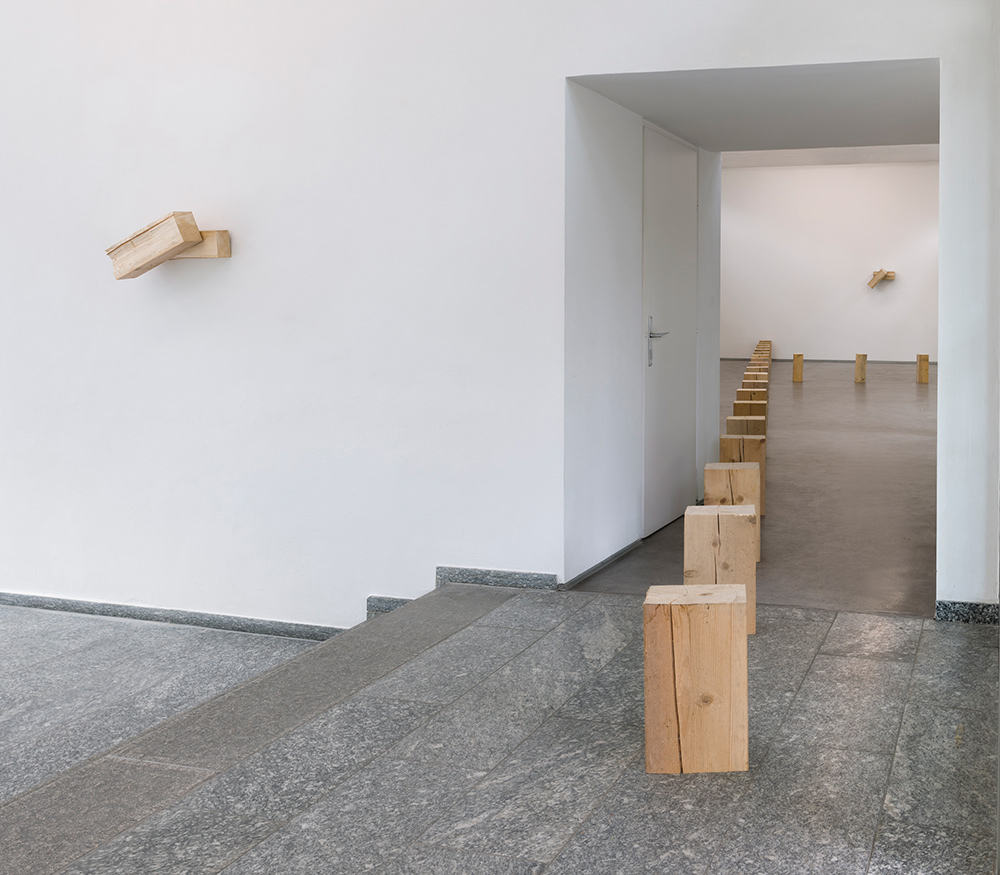
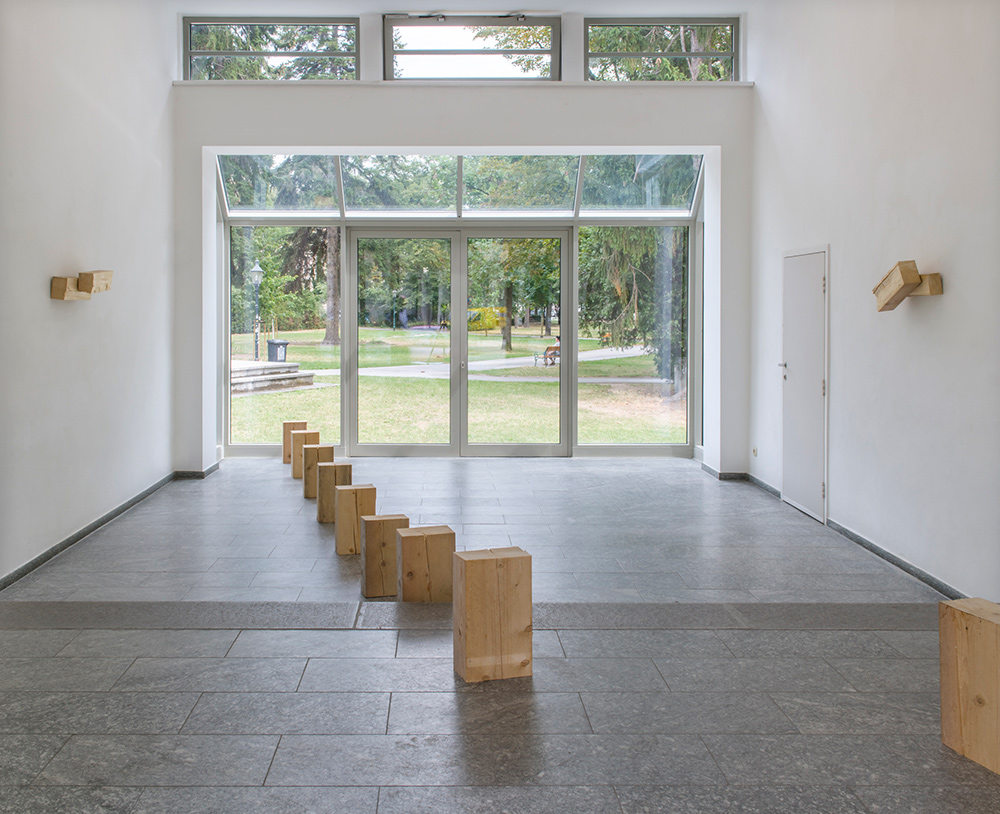
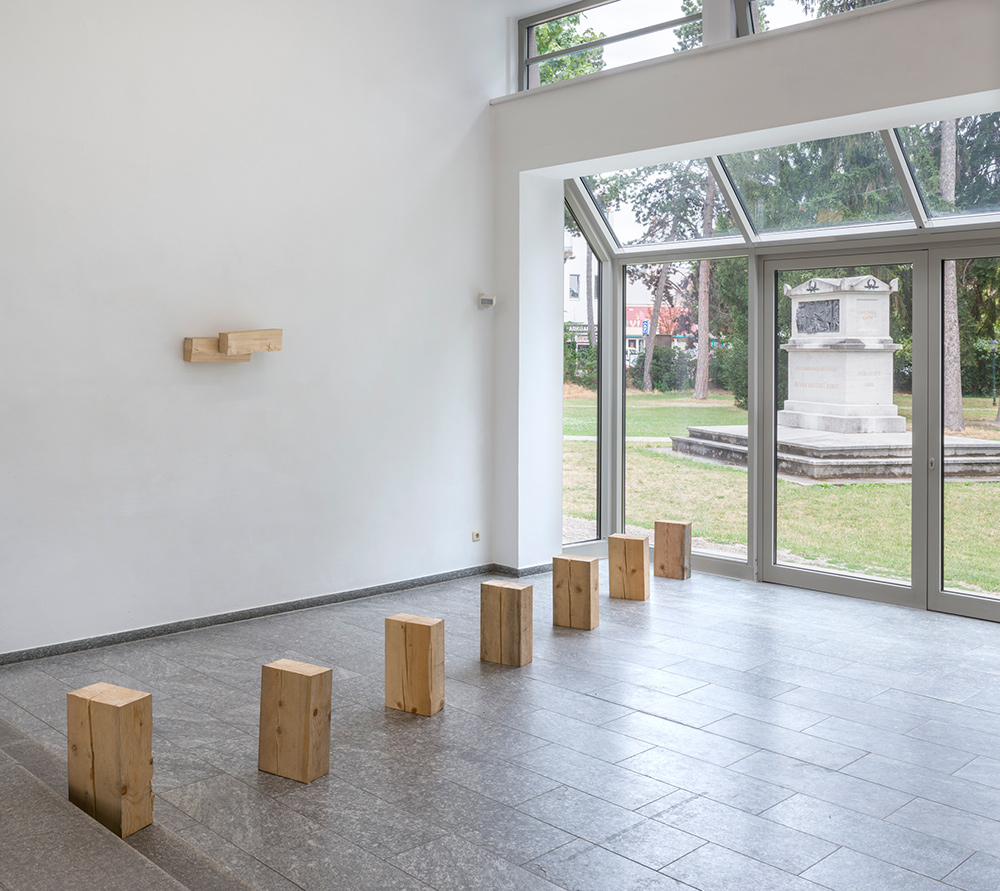
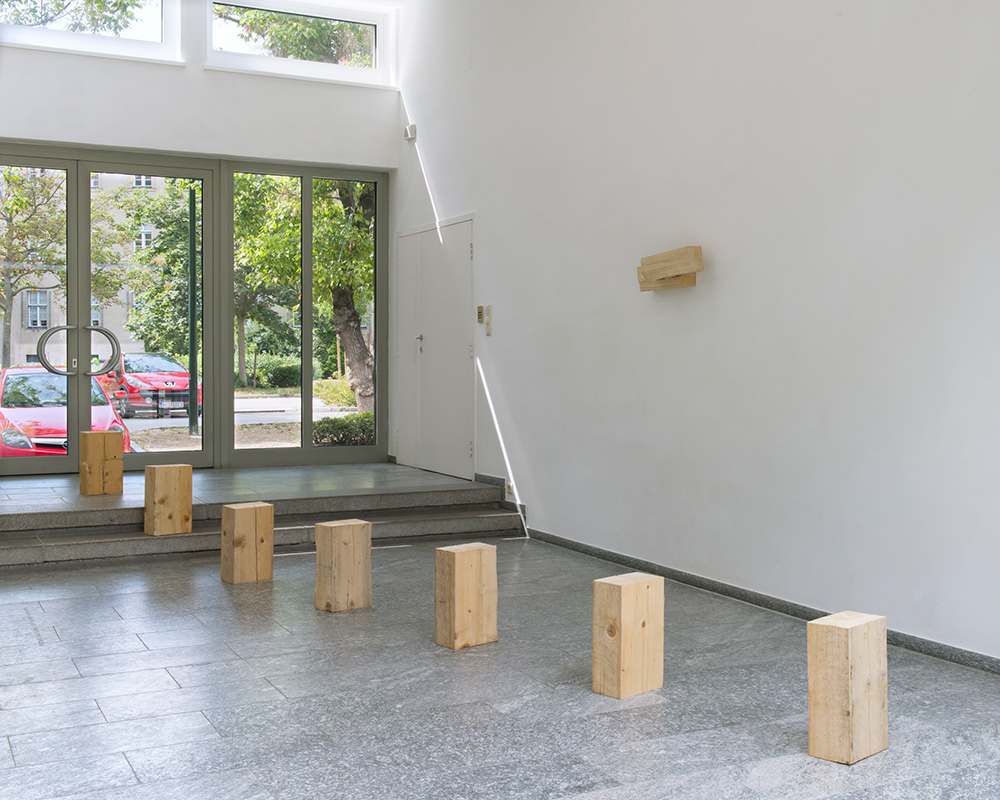
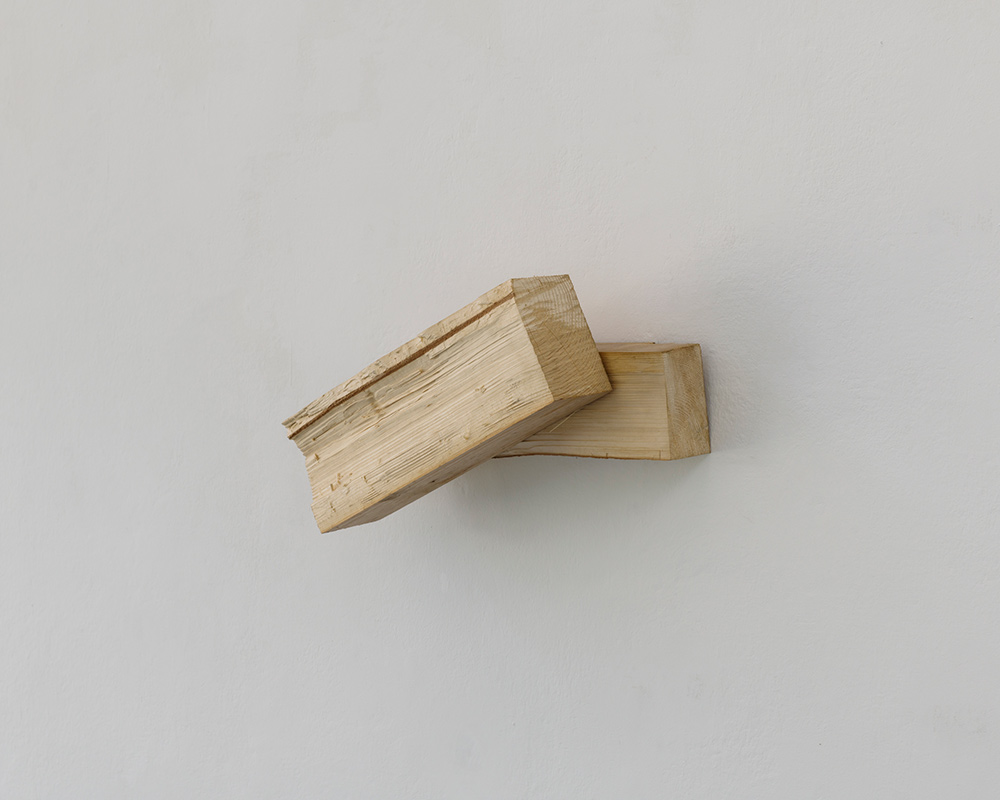
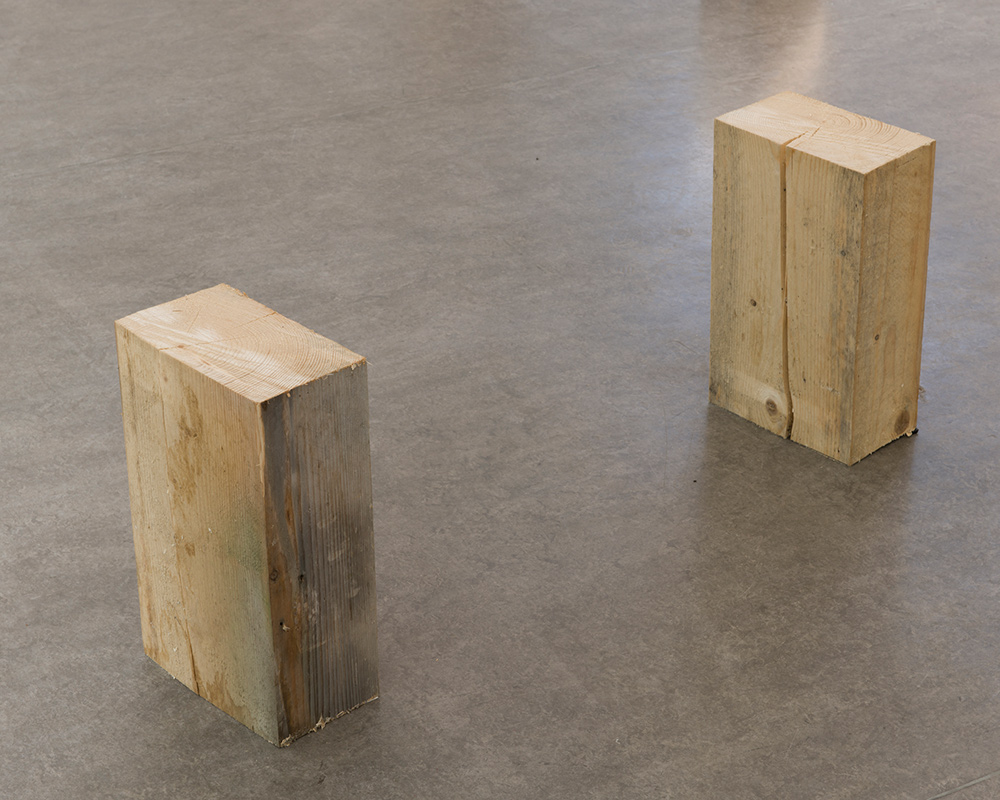
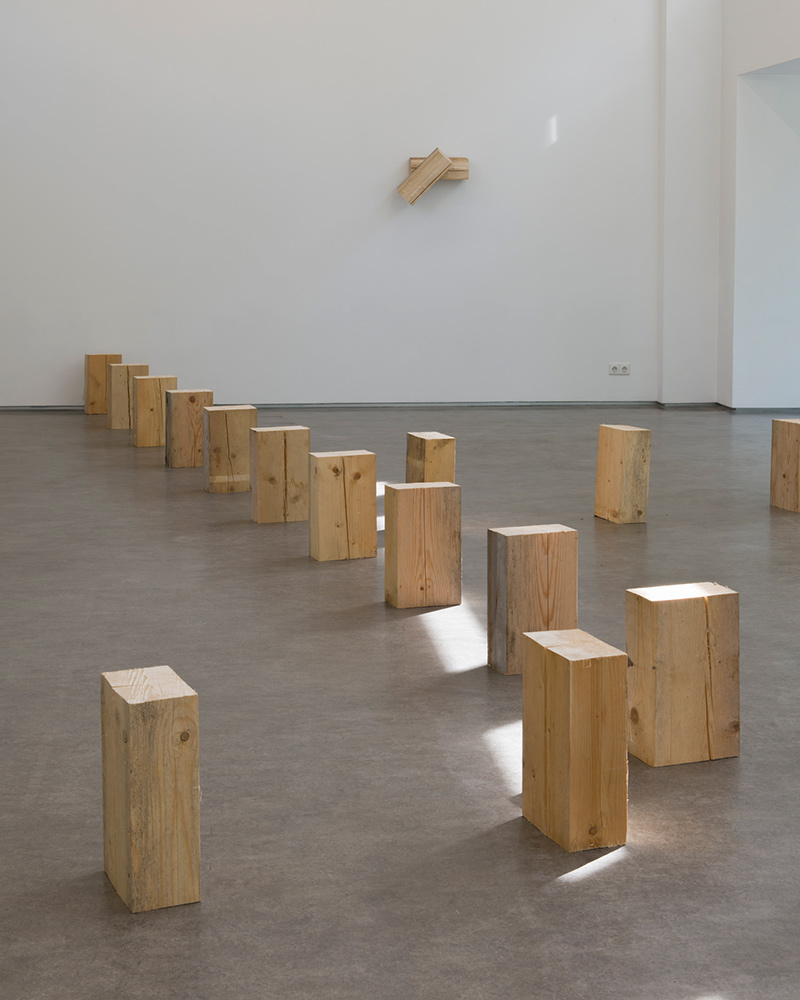
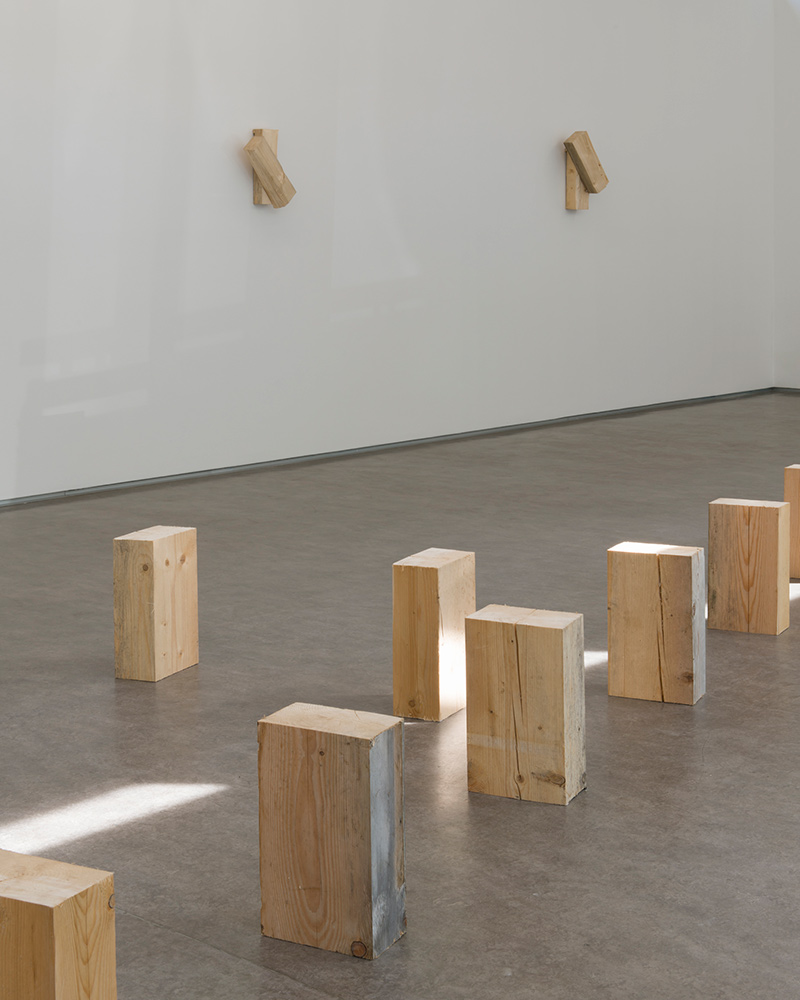
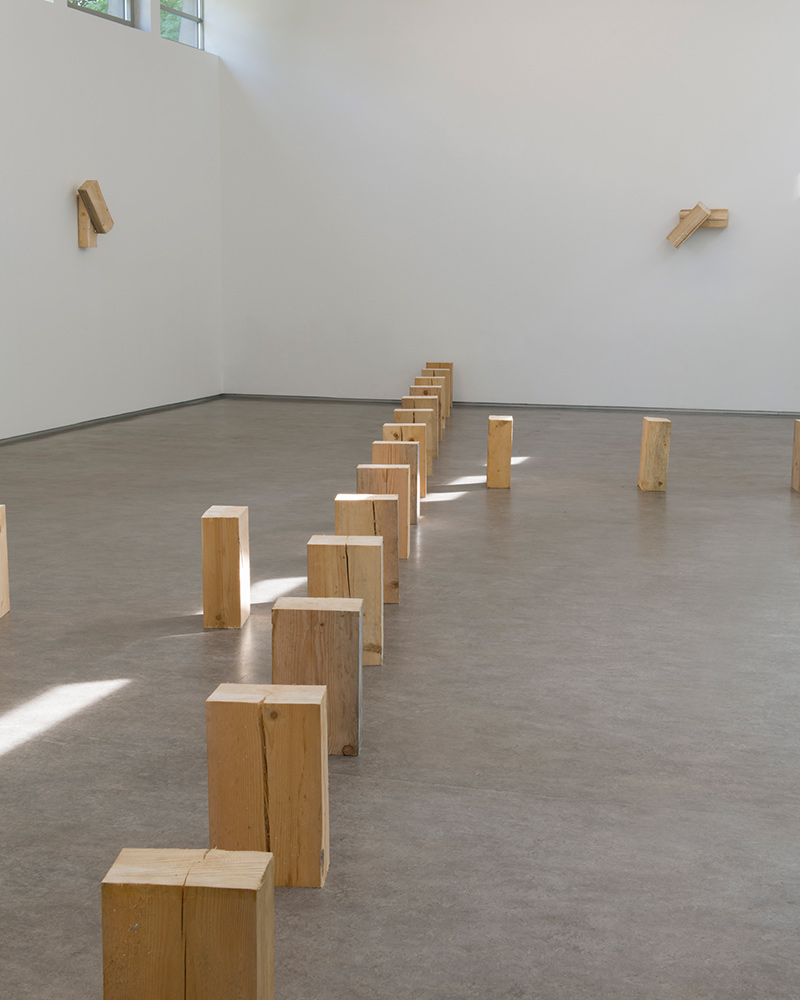
Exhibition view Skeleton-cuts, line by line, Richard Nonas,; Galerie Stadtpark, 2019; Photo: Stefan Lux; Richard Nonas; Skeleton-cuts, line by line, 2019; Wood
Legende
Almost-clarity about not-quite-confusion is what I want. Barely perceptible dissonance is what I want — the dissonance of place, the dissonance of art, the dissonance, I mean, of intersecting and conflicting human meaning cut into an unyieldingly physical world.
Richard Nonas

 
The work of Richard Nonas (b. 1936 in New York) is characterized by a formal simplicity and rigidity of material. Simple, mostly geometric, minimalist forms created out of wood, steel, or stone comprise the “vocabulary” of his often serial, repetitively structured spatial sculptures. But Nonas does not think of himself as a minimalist; he is neither interested in pure sculptural form, its intrinsic minimalist value, nor is he focused on the language of material. Nonas’s work relies fundamentally on the relationship of the spatial sculpture to the surrounding space, the location. One is inconceivable without the other. With the simplest of formal means, he creates spatial-sculptural scenarios capable of potentially addressing the entire spectrum of human sensibilities and also of subtly incorporating meanings that resonate with memories and emotion. The viewpoints and perceptual abilities of viewers therefore are of particular importance.

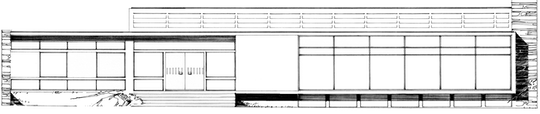
Specially developed for the Galerie Stadtpark building, Richard Nonas’s spatial sculpture skeleton-cuts, line by line questions and incorporates the exhibition space as well as the gallery’s entrance area in a spatial, sculptural manner. Nonas integrates a structure into the existing building structure, an architecture into the existing architecture of the modernist gallery building. Skeleton-cuts, line by line, can be understood as a structural form of evenly positioned wooden cubes that connects Galerie Stadtpark’s gallery space to its entrance foyer, but which pierces the entire building—quite invasively—at the same time. In the main space and foyer, additional rows of wooden cubes are touching at a right angle the longitudinal axis of the sculptural form, which is slightly rotated relative to the building’s floor plan. In its entirety, the produced structure enters into a spatial, relational dialogue with the surrounding space and subtly counteracts the orthogonality and clarity of the building. The overlapping of the two spatial structures (the gallery building and the orthogonal, wooden-cube form) goes far beyond an abstract, spatial-geometric or minimalist reading, rather it creates its own distinct form of spatiality: the interfusion of both spatial matrices yields a kind of third space with its own distinct, albeit ambivalent status. Nonas’s structural intervention makes space itself here the actual material. The careful yet simultaneously invasive placement of the spatial structure turns the spatial—in the sense of a spatialization—into the central aesthetic subject. Form, space, and specific location are not simply recognized or found here, but are formed and co-produced through visual perception.

Constituted by evenly positioned cubes, the spatial structure appears fragmentary and skeletal. With Nonas, it does not function in a formally autonomous way, in the manner of a serial minimalistic sculpture independent of space, but can instead be understood as a structure of support lines, imaginary volumes, and implied directions and spatial positions that develops its spatial presence and dynamics in relationship to the surrounding space and thus necessarily involves the viewer. The serial rows of cubes can certainly be thought of as a potentially expandable structure, at least in those places where they come into contact with the building’s glass surfaces. Conversely, the potentially expandable structure is confined by the walls of the exhibition space and building, thus halting this imaginary expansion. In this mostly mental process of “forming space,” the viewer’s current viewpoint becomes a critical factor around which everything revolves.

Installed in various locations in the exhibition space are a total of six wall elements, four in the main room and two in the foyer. These wall elements—each consisting of segments from the same piece of wood as the floor elements—do not form distinct sculptural units, but function as spatial markings highlighting the wall’s function as a spatial boundary. The intension here is less about emphasizing the limitation of the exhibition space than it is about focusing on the limitation of the spatial segments framed by the series of wooden cubes. These spaces within the space feature no right angles and they oppose—like the overall structural form that is “skewed” in relationship to the building—the formal clarity and authority of the exhibition space.

With formally simple means, Nonas creates “unclear” aesthetic situations. The status of the sculpture that seems clear-cut at first, appears, on longer observation, to be increasingly ambivalent. In the process of perceiving it, skeleton-cuts, line by line becomes the potential bearer and mediator of various evocations. The individual wooden “building block” thus recalls a form of vocabulary from a (polysemous) field of meaning that unfolds before the observer, but which eludes clear conceptual definitions and also shifts between different temporal horizons—between the past, the present, and the future. Simply focusing on contemplating it in the here and now would in any case be insufficient. Nonas’s sculptural spatial structure aims neither for a direct, merely kinesthetic experience “of the object” nor for a contemplation that transcends material status, for instance in favor of “pure,” autonomous, geometric-serial form. Beyond the perceptual tenets of minimalism, the artist seeks to create a space, indeed a place of spatial concentration and layering, a “place” instead of mere “space,” that is, a completely specific place, a “physical space imbued with human meaning.” (Nonas)

For the artist, an object is far more ontologically potent than its mere material status would suggest. With Nonas, there always seems to be a significant divergence between the material and evocative content of an object or a spatial sculpture. What seems simple at first glance, quickly generates varied and quite contradictory kinds of resonances. Defining or pinning down Nonas’s work in terms of historical genre also presents a challenge. At times it resembles sculptural intervention, at other times architectural environment, or then again spatial gesture or mnemonic resonating space. The spatial-structural interventions are always minimal but not minimalistic in nature. With simple material and structural placements, the artist carefully disturbs the spatial syntax of the given location (exhibition location). He directs the focus of the perceptual process away from the thing, from the physically concrete toward the spatial itself. Viewers are not so much confronted with the question of what they see, but rather with what the spatial reveals to them, what it manifests to them and what that specific, aesthetic location demands from and means to them—in an entirely personal way.

Nonas creates a spatial scenario which, on longer observation, produces a multiplicity of possible latent meanings, in actuality a “supersemantics.” This is not about content in terms of linguistic or narrative evocation, interpretation, or connotation, but about meaning “pre- and beyond” language, about an aesthetic capacity—rather than an epistemological one—that is articulated in a highly intuitive, undirected, and diffuse manner. In the artist’s view, the aspect of imbuing meaning and evoking content can be understood as a space of various resonating meanings that deliberately incorporates the personal, i.e. what’s remembered, emotional, and projective in a manner that is completely at odds with the dictum of minimalist de-subjectification. The potential resonating space of a thing, of a sculpture, or of the created specific place, remains semantically ambiguous and tends towards a “surplus” of meaning. In this way, the artist turns the recipient into an active perceiver who gives meaning to what is seen in a precognitive and semantically “unclear” manner.

Nonas’s work strives for a domain of vagueness and ambiguity. It seeks to create a state of suspended meaning that refuses and opposes a separating of cognition into perceptual and mental, into sensual and epistemic. With Nonas, the borderline between different cognitive qualities and forms is presented as permeable and osmotic, nevertheless he is uninterested in deconstruction. Rather, he specifically works with a lack of clarity, deliberately subverting semantic unambiguity in order to generate a state of ambiguity on site and in the here and now. The less “pronounced” and articulated the evoked contrasts are, the stronger and more artistically effective the work is. In skeleton-cuts, line by line, Nonas therefore creates a specific place that not only fluctuates between knowledge and non-knowledge, between sensorial perception (multiple manifestations) and epistemological vagueness, but which is also capable of mediating between these presumed opposites. He is concerned with not-knowing as its own form of knowledge, with a knowledge that takes into account the precognitive, the cognitively diffuse, as well as the inkling, i.e. the not-yet-knowing. In the artist’s view, getting closer to things, being able to encounter the limits of knowledge, requires ambiguity more than it does rationality.

Richard Nonas searches spatially and aesthetically for the moment when an existing, familiar thing, a space or a place becomes something else. “The problem is that we are all kind of lazy in our seeing. We are used to knowing the things we see. But every once in awhile something catches you and it looks different than you thought it would. I see something that was always there in front of me and I didn’t notice it and suddenly I see that and then I start to think why didn’t I ever see that before? And that’s that doubleness that interests me. Once you do see it, you cannot not see it.” This modification of the view does not mean a mere shift in perspective, but marks a break in the perceptual continuum, in the familiar. In the moment of transformation in which perception, thought, and feeling finally blend together naturally, a shift occurs subjectively that makes the entire world seem potentially different and transformed. A subtle, spatial-ontological dissonance can thus lead to a fundamental epistemic eruption that not only has a reverse effect on seeing and perception, but, more broadly, on the entire being of the beholder.
 
David Komary
Translation: Eric Smith
 
top


Richard Nonas

galeriewinter.at
fergusmccaffrey.com

Richard Nonas was born in New York in 1936. He studied literature and then social anthropology at the University of Michigan, Lafayette College, Columbia University and the University of North Carolina. Following his education, Nonas worked as an anthropologist for 10 years, doing field-work on American Indians in Northern Ontario, Canada, and in Northern Mexico and Southern Arizona. He turned to sculpture in the mid-1960s at age 30. His anthropological work left a deep imprint that affected his sculptural practice and his engagement with the perception of space. Through a Minimalist vocabulary, Nonas developed a body of sculpture that engaged with the issue of place.

In the 1970s, Nonas was a part of an intrepid group of artists and curators who found alternative places to show. His work involved the alteration of the environment and repeated geometric forms, and he came to see sculpture and space as interdependent carriers of deep philosophical and emotional meanings. Many of his works – made of such materials as timbers, linear beams, granite curbstones, and steel planes – rest directly on the ground and function less as formal aesthetic objects, and more as spatial markers. His forms serve to interrupt the space, calling attention to the non-specificity of the forms on the one hand, while creating a charged sense of space on the other.

The artist has exhibited extensively in the U.S. and abroad, making small and very large works both indoors and out, and has written extensively on the culturally dependent intellectual and emotional meanings of sculpture, space and place. He has been the subject of several museum and institutional exhibitions, most recently including: FiveMyles, Brooklyn (2020–21); Musee Gassendi, Digne-les-Bains, France (2019); MAMCO Geneve, Switzerland (2019); ‘T’ Space, Rhinebeck, New York (2018); the Art Institute of Chicago (2017); MoMA PS1, New York (2016); MASS MoCA, North Adams, Massachusetts (2016); and the Walker Art Museum, Minneapolis (2012), among others.

Richard Nonas died at 85 years old, in May 2021 in New York.
 

Selected Solo Exhibitions

2019
Richard Nonas: all; at once, Fergus McCaffrey, New York
Riverrun (from Swerve to Bend), MAMCO Geneve

2018
Out Away Back, Neochrom Gallery, Turin
Richard Nonas: WHERE NONE, ‘T’ Space Gallery, Rhinebeck, NY

2017
Richard Nonas: SLANT, Fergus McCaffrey, New York
Richard Nonas & Native American Art, OV Project, Brussels 
Richard Nonas: “…AS LIGHT THROUGH A FOG…”, Architectural Memory Pierced by Art, Church of Santa Maria della Spina, Pisa,

2016
Richard Nonas: ridge (out, away, back), Art Institute of Chicago, Chicago
Richard Nonas: The Man in the Empty Space, Massachusetts Museum of Contemporary Art, North Adams, MA
RIVER-RUN, P420 Galleria d’Arte, Bologna

2015
Richard Nonas, Galerie Hubert Winter, Vienna
Richard Nonas: More, Galerie Hans Mayer, Düsseldorf

2014
Richard Nonas, Una Vetrina, Rome
Construction Phase I, II, III, Fergus McCaffrey, New York
Richard Nonas, Fergus McCaffrey, New York
Richard Nonas: Holdfast, Galerie Bruno Mory, Besanceuil, Bonnay, France

2013
Richard Nonas, Galerie Hubert Winter, Austria
Richard Nonas, James Fuentes, New York

2012
SPLIT, Galerie Anne de Villepoix, Paris
Out, Away, Back, Noire Gallery, Turin

2011
Richard Nonas: No-Water-In, P420 Galleria d’Arte, Bologna

2010
Shoots good, not straight, Musée d’art moderne et contemporain, Saint-Étienne Métropole, France
Wedge for now, Galerie Anne de Villepoix, Paris
Richard Nonas: In situ Installations & Sculptures, Galerie Sfeir-Semler, Hamburg

2009
Plow / Richard Nonas, Organized by Filippo Fossati, Villa Mondolfo, Como
Richard Nonas, Galleria Michela Rizzo, Venice
Wood Lines & Slates, L’Atelier Archipel, Arles

2008
Lemmons Contemporary, New York
Richard Nonas: A Special Day, Spazio Pubblico Arte Contemporanea, Udine
cowboy coffee / new work, old ground, Esso Gallery, New York

2005
Richard Nonas: Mud Museum, Galerie Hubert Winter, Vienna

2004
Hill Gallery, Birmingham, MI

2003
Hill Gallery, Birmingham, MI
Richard Nonas, Galerie Hubert Winter, Vienna

2002
Erik Stark Gallery, New York

2001
Sophia-Maria and the Indian, Lawrence Markey Gallery, New York

2000
A Ghost in Every Kayak, Five Myles, New York

1999
Richard Nonas, Galerie Hubert Winter, Vienna
Hill Gallery, Detroit

1998
Enough’s Enough and Sun and Moon, MAMCO, Geneva
Primo Piano Galleria, Rome

1997
Galerie Hubert Winter, Vienna

1996
MAMCO, Geneva

1995
C.C.C., Tours, France
Cold Coffee. First in the Morning, Anders Tornberg Gallery, Lund, Sweden
Crude Thinking. First in the Morning, Last at Night, Lunds Konsthall, Lund, Sweden
Crude Thinking / Thick Making, John Hansard Gallery, The University of Southhampton, Southhampton

1994
Transit, Xippas Gallery, Paris
One Five, Brussels
Richard Nonas, Galerie Hubert Winter, Vienna
Its own melting: new sculpture, Ace Gallery, Los Angeles

1993
Richard Nonas, part I, Galerie Hubert Winter, Vienna
Richard Nonas: Drawings, Gallery 360°, Tokyo
Richard Nonas: part II, Galerie Hubert Winter, Vienna
Hatapollohuis, Eindhoven

1992
Andre Simoens Gallery, Knokke-Houte, Belgium
Person’s Weekend Museum, Tokyo

1991
Wall Sculpture, Ace Gallery, Los Angeles
Between Old Times: Sculpture for a Changing Castle—for Bronislow Malinowski, Center for Contemporary Art, Ujazdowshi Castle, Poland
Harcus Gallery, Boston
Ben Shahn Galleries, William Patterson College, Wayne, NJ Gallery
Richard Nonas: Mozart Imagines America – Mozart Imagines The Future, Galerie Hubert Winter

1990
Sandra Gering Gallery, New York
Galleri Lars Bohman, Stockholm
Christine Burgin Gallery, New York

1989
Hill Gallery, Birmingham, MI
Lucifer Landing, Cranbrook Institute of Art, Birmingham, MI
Galerie Hans Meyer, Dusseldorf

1988
Lund Museum of Art, Lund, Sweden
Ace Contemporary Exhibitions, Los Angeles,

1987
Sten Ericsson Gallery, Stockholm

1986
Anders Tornberg Gallery, Lund, Sweden
Pamela Auchincloss Gallery, Santa Barbara, CA

1985
Annemarie Verna Gallery, Zurich
Jack Tilton Gallery, New York
Richard Nonas: Parts to Anything, Nassau County Museum, Roslyn Heights, NY
Krista Mikkola Gallery, Helsinki

1984
The Coathanger Sculptures, plus Drawings, Anderson Gallery, School of Arts, Virginia Commonwealth University, Richmond, VA

1983
Richard Nonas, Real Art Ways, Hartford, CT
Richard Nonas, The Photography Gallery, Harborfront, Toronto
Small Sculptures/Some Drawing, Jack Tilton Gallery, New York

1982
Sculpture/Drawings/Richard Nonas: Get Out/Come Back/Stay Away, University Gallery, University of Massachusetts at Amherst, Amherst, MA
Summer Studio Atelier 1982, 80 Washington Square East Galleries, New York University, New York
Get Out/Stay Away/Come Back: Richard Nonas/Sculpture and Drawings, Galleriet (Anders Tornberg Gallery), Lund, Sweden
Richard Nonas en skulkpturinstallation, Pictura, University of Lund, Lund
Goats Itch/Richard Nonas: Narrative Work/Sculpture/Drawing/Sound-Tape, Franklin Furnace, New York
Richard Nonas: Drawings, Georgia State University Art Gallery, Atlanta

1980
Richard Nonas: Canadian Word-Chaser Series, Mercer Union, Toronto
New Sculpture and Drawings, Oil and Steel Gallery, New York
Richard Nonas, The Hudson River Museum, Yonkers, NY

1979
Nonas/Mangold: Combined Shows, John Weber Gallery, New York
InK, Zurich, Switzerland Richard Nonas, Galleria Salvatore Ala, Milan
Richard Nonas, Young Hoffman Gallery, Chicago

1978
Richard Nonas/Sculpture, John Weber Gallery, New York
Viewpoints: Richard Nonas, Walker Art Center, Minneapolis
Richard Nonas, G. Mollet-Vieville/J.P. Najar, Paris
Richard Nonas: Sculpture, Ugo Ferranti Gallery, Rome
Richard Nonas: Sculpture, Albert Baronian Gallery, Brussels, Belgium
Richard Nonas, Annemarie Verna Gallery, Zurich

1977
Montezuma’s Breakfast, P.S.1, The Institute for Art and Urban Resources, Inc., Long Island City, NY

1976
Works in Wood 1970-1976, Art Gallery, Hopkins Center, Dartmouth College, Hanover, NH
Richard Nonas: Nuove Sculpture in the Una Vecchia Torre, Presented by Marilena Bonomo, Spoleto
Richard Nonas, Galleria San Fedele, Milan
Richard Nonas, Galerie Hetzler + Keller, Stuttgart
Richard Nonas, Galleria Salvatore Ala, Milan

1975
Richard Nonas, Galleria Marilena Bonomo, Bari
Equalizer. The Third Sculpture of the Boundary Man Series, The Idea Warehouse, The Institute for Art and Urban Resources, Inc., New York
Richard Nonas, Holly Solomon Gallery, New York


1974
Richard Nonas: Sculpture, Minetti Rebora Galleria Forma, Genoa, Italy
Galleria d’Allessandro, Rome, Italy
Galleria Ugo Ferranti, Rome, Italy
Richard Nonas, Galerie Schottle, Munich, Germany
Richard Nonas, 383 West Broadway, New York

1973
Richard Nonas: Sculpture, The Clocktower, The Institute for Art and Urban Resources Inc., New York
Richard Nonas: California Steel Pieces, Daniel Weinberg Gallery, San Francisco
Richard Nonas: Other Drawings, 112 Greene Street, New York

1972
Richard Nonas: Enclosures, 10 Bleecker Street, New York
(Inaugural exhibition) Richard Nonas, 112 Greene Street, New York

1971
Rochester Surround: 3 days/3 ways, University of Rochester, Rochester, NY
   
top