
EXHIBITIONS
Residual
Ghenadie Popescu
October - November 2025
Legende
In his objects, performances, films, and animations, Moldovan artist Ghenadie Popescu (b. 1971) reflects on collective images and notions of cultural as well as political identity. His works often engage specific and at times local references and contexts, yet they always subtly address universal questions. Against the backdrop of Moldova’s post-communist history and the present, he frequently turns observations, questions, and ideas into the absurd. For over ten years, Popescu has been developing stop-motion animations, covering everything from creating figures and sets to editing and sound.
Estrangement plays a central role in Popescu’s artistic practice. He works with hyperbole, elements of symbolic exaggeration, and narrative condensation to counteract the absurdity of life and the adversities of the system—both monetary and political—and to be able to endure them without succumbing to cynicism and apathy.
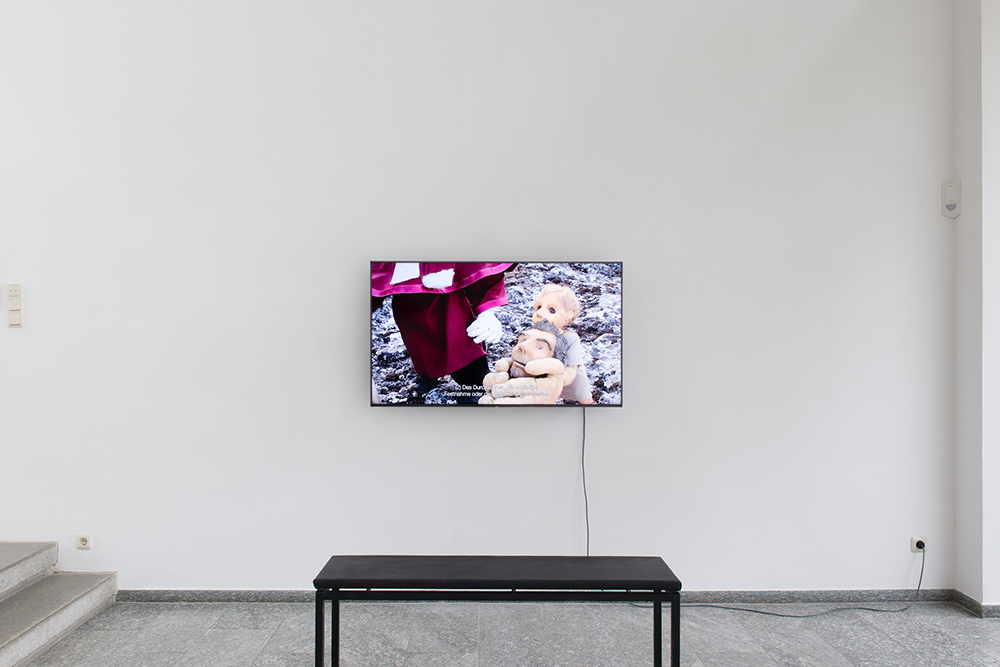
In Ciorna River (2016), Popescu succeeds in creating a condensed scene in a four-minute stop-motion animation that alternates between idyllic landscape, the grotesque, and parable. A small child with oversized, pleading hands encounters a judge by the Ciorna River who speaks of an ideal world built on law and order. According to Popescu, the characters are all inspired by the rampant corruption of the Moldovan justice system, for which this region is particularly well known. The main figure of the judge initially appears to be an honest man with good intentions and searches here for something worth protecting, for “goldfish.” The child represents a hopeful citizen who seems sympathetic, but whose ingenuousness also conveys naivety and immaturity.
The Moldovan landscape (around the Ciorna River) functions as a kind of projection screen that alludes to notions of homeland or, transferred to the political sphere, to the state. As outlined, the judge searches the waters for goldfish so that they can be saved from an oversized snake—evil itself. He firmly believes in the power of the law. In a surrealist condensation and estrangement, his reciting of the Moldovan constitution can be heard throughout the film. Despite dramatic events, this never ceases until the end. Thus law and order—in the form of the Moldovan constitution—are given voice and expression in the form of a likeable judge, who is allowed to impart knowledge while the figure of the child, the childlike citizen, listens attentively. And yet the magistrate is still overpowered by the snake—perhaps seduced by it previously? The judge, in a sense a symbol and representation of the political system, soon loses his head, which from this moment on is carried around tenderly by the little boy. Not long after, however, he is completely overwhelmed by the snake and ultimately ends up as a kind of scarecrow in the landscape, while the boy continues on his way.
In this unsettling scene, the viewer attempts to fill in the narrative and semantic gaps and decipher the almost disturbing symbolism. Nevertheless, a certain sense of estrangement lingers, because the absurdity cannot be completely erased through interpretation or understanding alone. Rather, the parable reflects a reality shaped by corruption that the people of Moldova know all too well, especially in the region around the Ciorna River. On a higher level, the parable speaks to the importance of the law and the bizarre consequences that arise when it is abused.
Popescu works with tragicomic elements, using hyperbole to portray his characters affectionately but ultimately as problematically flawed. The ironic smile he elicits from the viewer functions as a distancing form of affirmation, a means of confronting both the hopelessness and horror. Irony thus becomes legible as a distinctly psychological device, far from being merely stylistic. Exaggerated irony and dark humor serve as mechanisms for coping—mental tools of confrontation as well as peaceful weapons of self-empowerment and rebellion.
Popescu himself describes the scene as a kind of Greek drama that is too deeply rooted in reality to lead to the ideal. In their transferability and timelessness, Popescu’s characters, like those in his other films, appear as archetypes: they are individual characters and at the same time condensed stereotypes. At times, as in Popescu’s deportation films, they even culminate in radically concentrated portraits of the perpetrators and the system behind them.
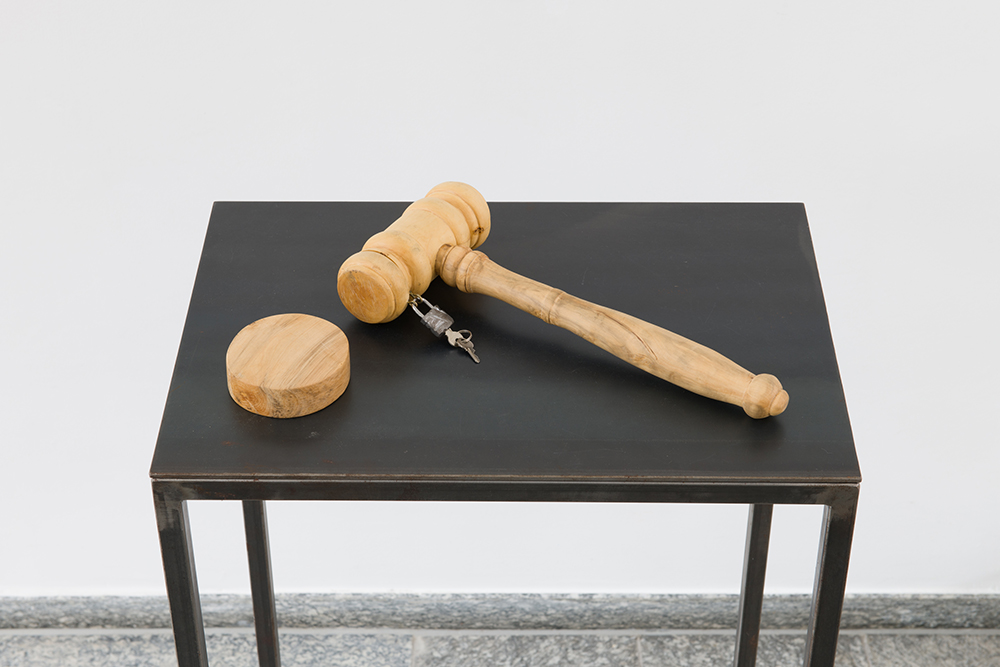
With his implement-like object Corrupted Tool for Corruption (2025), Popescu references the judicial symbol of the judge’s gavel. The judge confirms the verdict with a strike of the gavel. Popescu constructs a similar wooden gavel but adds a small but important function. Popescu’s gavel can deliver the binding strike, but also offers an alternative—a kind of back door. If desired, it can deliver a delayed strike when the padlock securing the flap on the top of the gavel has been opened. When the lock is opened, the gavel delivers a second strike immediately after the first. If and when the judge would use this back door is left to the viewer’s interpretation. According to the artist, the lock symbolizes the privatization of justice. It represents bribery, manipulability, and corruption. In its design and construction, the gavel serves as a moral portrait of the political system—the reality Popescu experiences and depicts, whether influenced by money, arbitrary power, or decree. With this enhanced tool, the judge activates the possibility of an additional or relativized judgment. Thus, a course of events that may have seemed final can take a different turn.
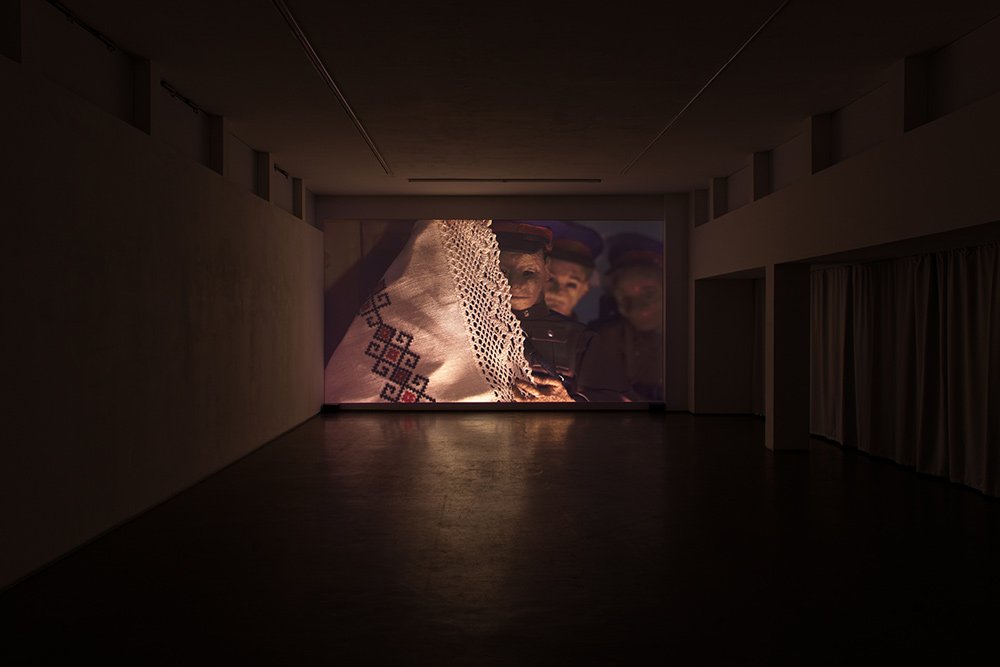
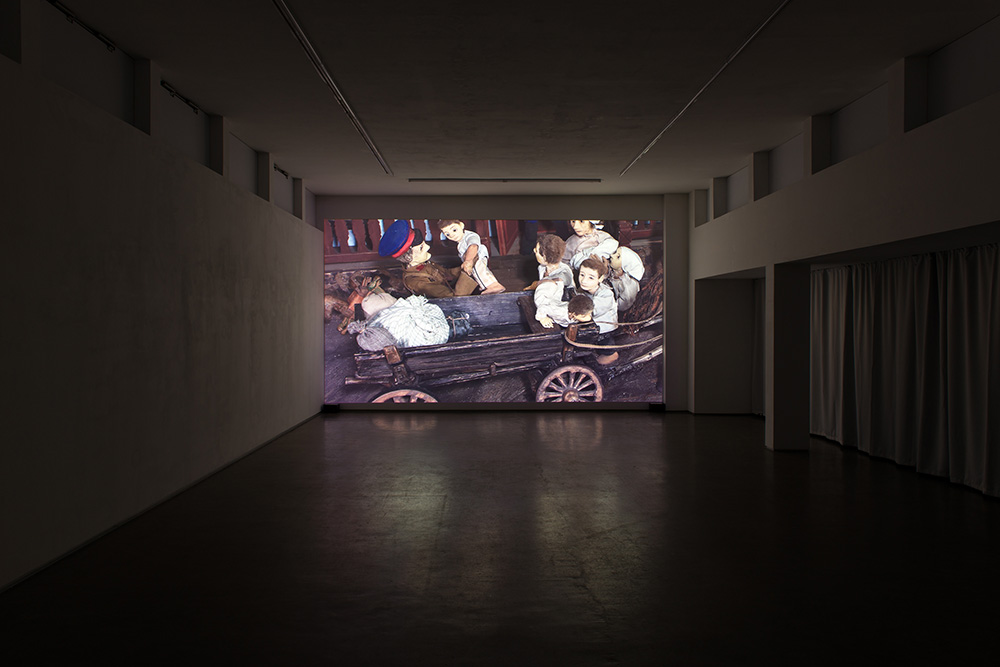
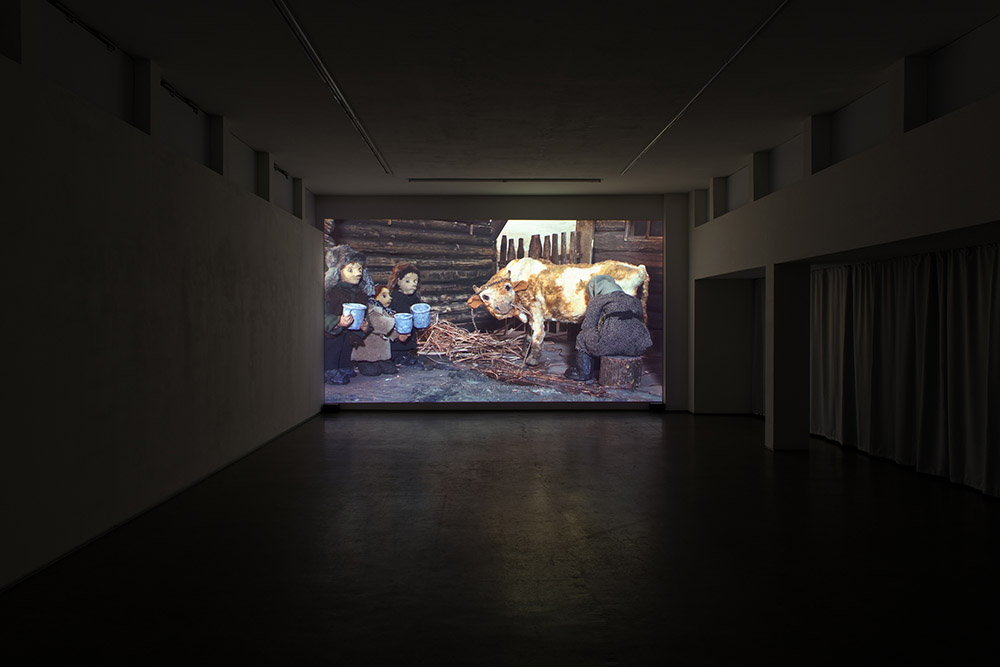
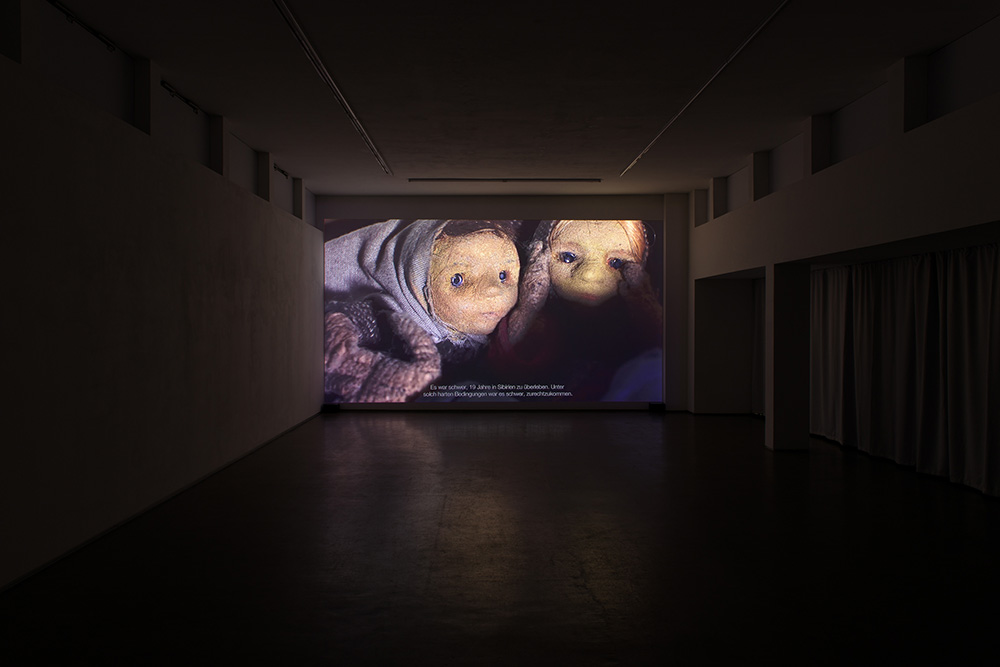
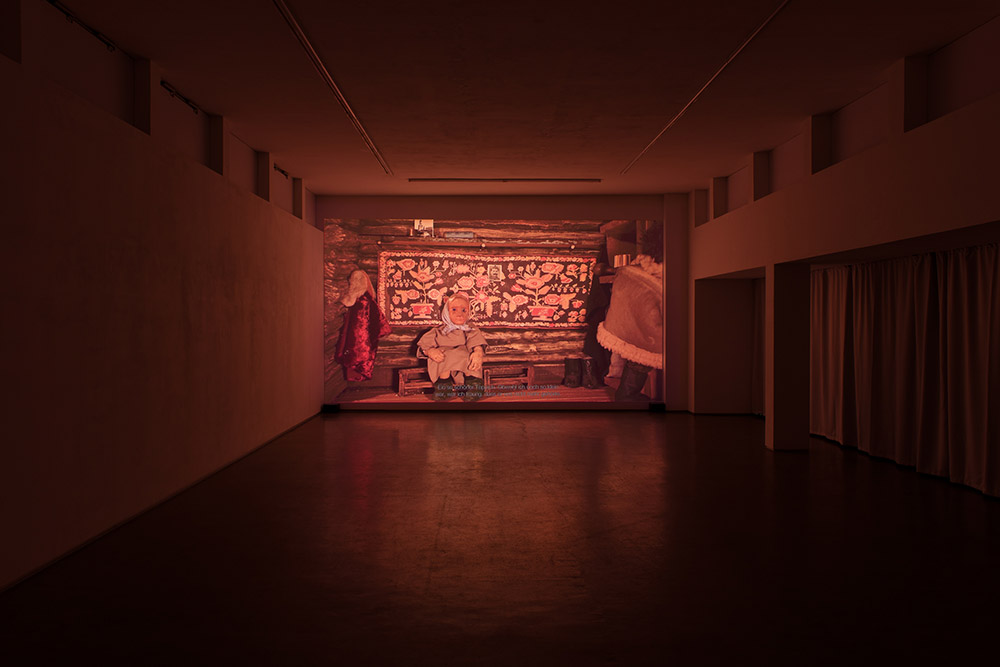
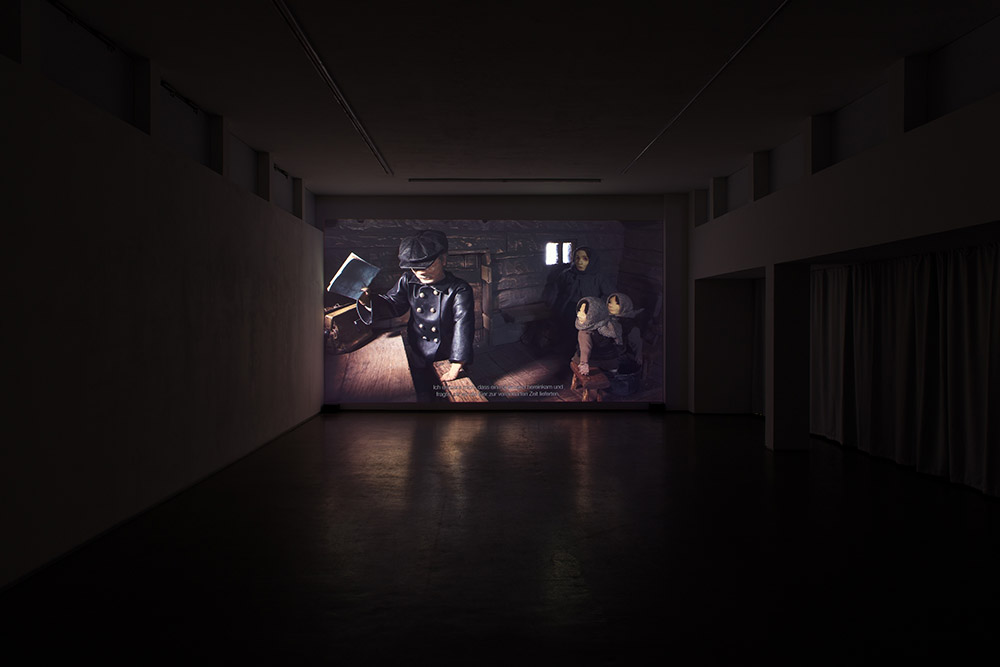
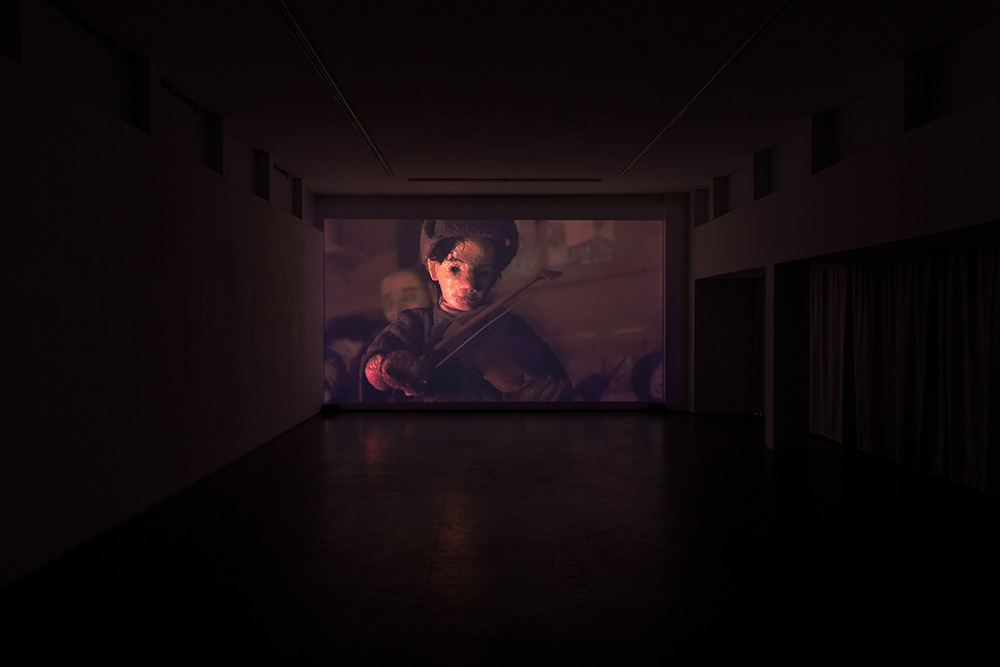
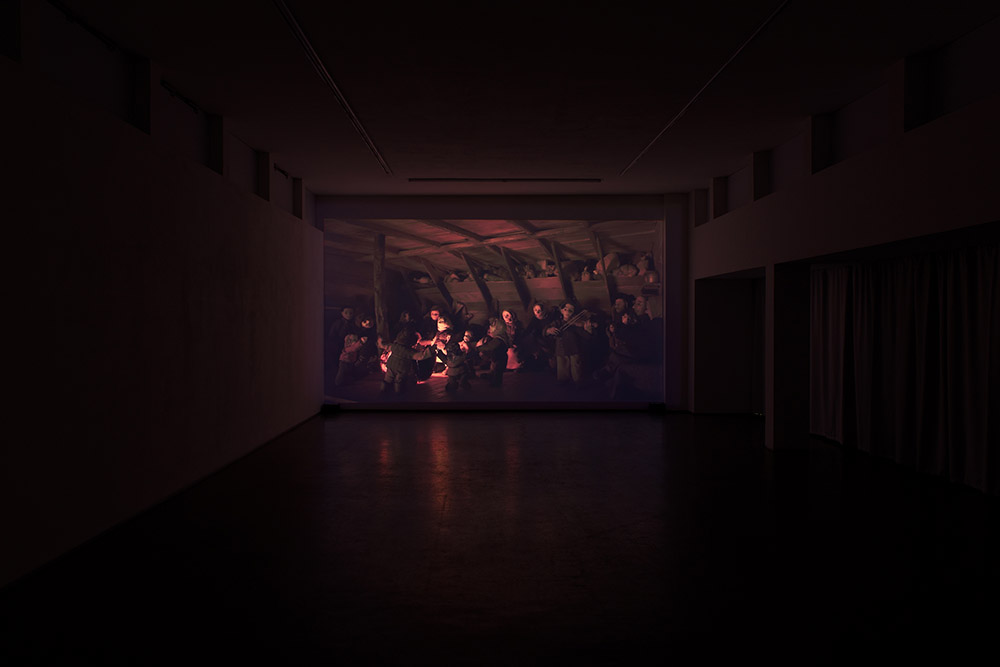
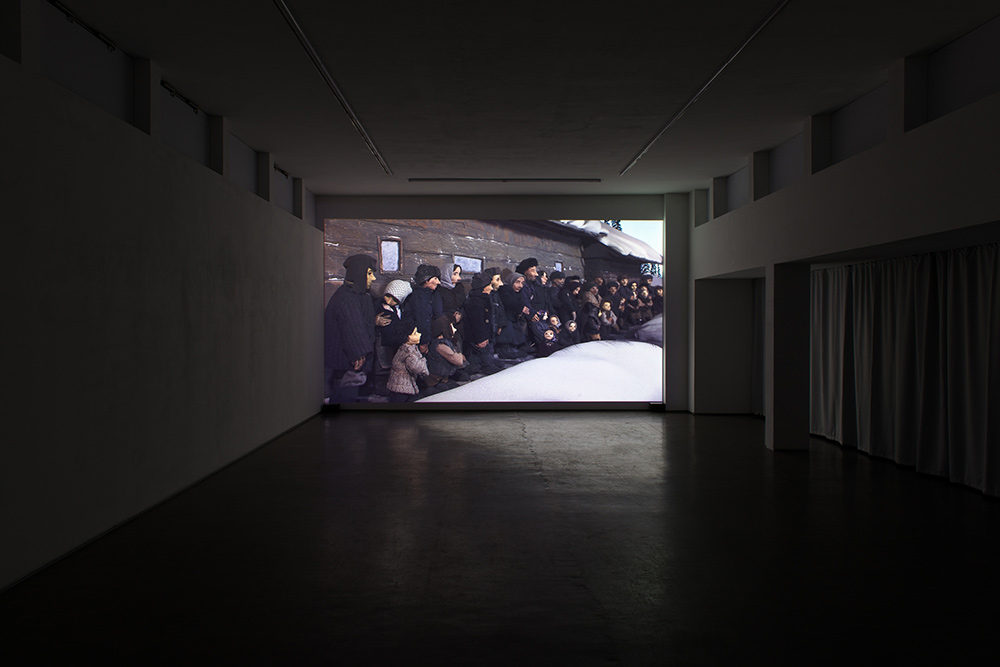
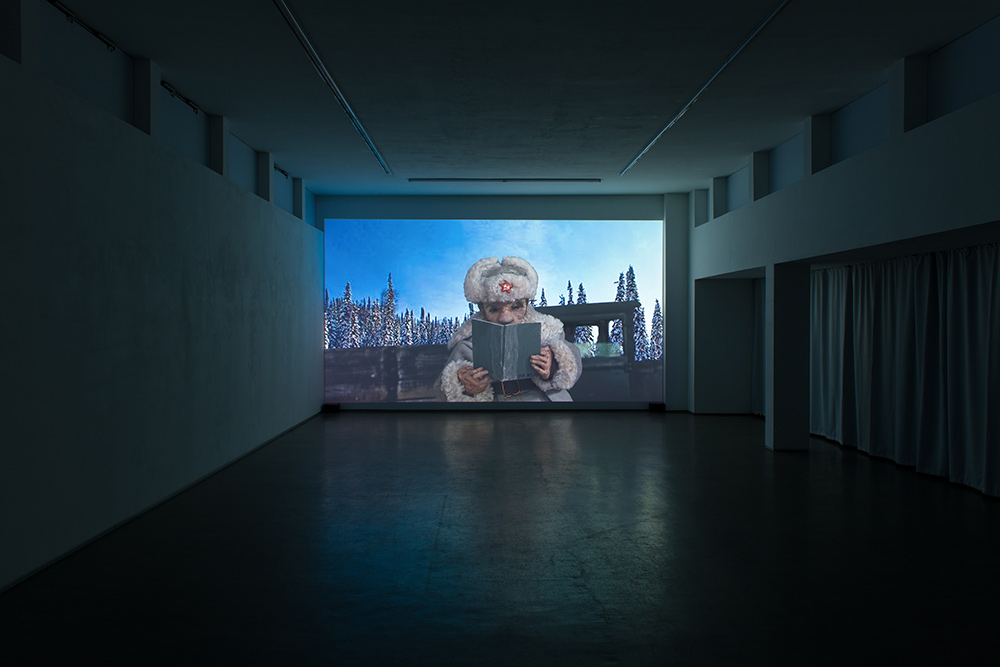
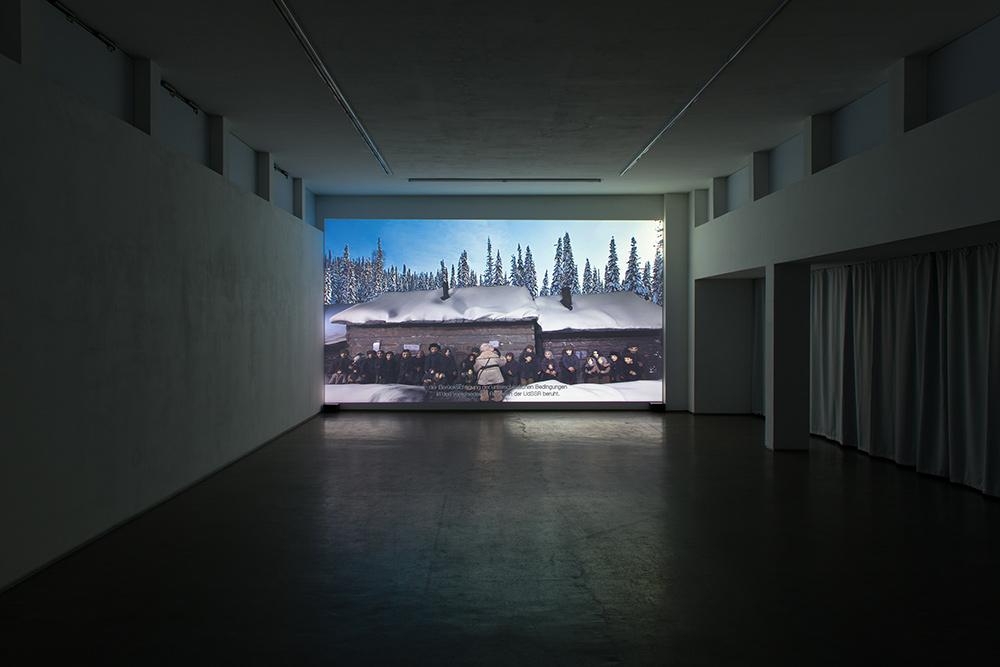
Since 2012, Popescu has been compiling eyewitness accounts of the deportations of the Romanian population born in the historical region of Bessarabia—which today would cover most of the Republic of Moldova and part of present-day Ukraine—under Stalin between 1941 and 1951. These testimonies form the background and basis for elaborate animated films, some of which take several years to produce. In the main gallery of the exhibition RESIDUAL, the immersive video projection Childhood Memories, Siberian Flavour (2018–2025) presents four eyewitness accounts realized as stop-motion animations.
Since there are hardly any official records of the deportations in the 1940s due to a lack of political interest, Popescu has made it his mission to preserve the oral histories and present them in an artistically narrative, hauntingly poignant form. This is because the deportees, who were young children at the time, are now very old. Given the advanced age of those impacted, only a small, several-year window remains to give them the opportunity to be heard and establish a culture of remembrance that has been lacking until now.
Despite the great temporal distance to the events recounted, Popescu creates a mnemonic short circuit—a connection between then and now that transcends time—reactivating events by reenacting them sculpturally and narratively with handmade puppets. The original voices of the interviewees can be heard, while the visual level of the narrative—in the form of hand-puppet scenes shot by Popescu frame by frame at twelve frames per second—is condensed into a filmic sequence.
Elena Severin, Stefan Ciobanu, Nina Tanase, and Elena Cazacu/Nina Cazacu recount the day of their deportation, as well as their time in Siberia—the cold, frost, hunger, illness, and the hard-hearted, brutal soldiers who stormed into their homes. Elena Severin, born in 1940, recalls how her family was forced to gather their most essential belongings within minutes. Stefan Ciobanu, born in 1943, describes how his family only survived the winter by exchanging a traditional Moldovan carpet, their only valuable possession, for a cow. Nina Tanase, born in 1955, also talks about how she exchanged a traditional carpet for a pail of potatoes in order to survive. Elena Cazacu and Nina Cazacu, twins born in 1940, recall a soldier who regularly collected the eggs laid by the only hen in their household, despite the widespread scarcity. The state demanded 100 eggs per hen annually, regardless of the family’s actual needs. But the twins also recall a neighbor who owned a violin. With no electricity and often no gas, it was dark between 4pm and 8am. During these hours, families would gather to dance. Despite the repression and dire conditions, these musical gatherings brought joy, comfort, and hope to the displaced people. As the twins explain, they could forget for a short time that they had been torn from their homeland.
There is an element of reception aesthetics inherent to Popescu’s deportation films: they tell the story and portray the events in a moving way. Yet this aspect of production aesthetics leads to even deeper levels of collective memory, appropriation, and processing the past. They contain a memetic, psychological, collective-historical, and political dimension. The frame-by-frame reenacting and restaging of events resembles a meticulous yet sensitive dissection and penetration of the past.
By creating an immersive, dreamlike setting in which the viewer is completely enveloped in darkness and confronted with larger-than-life hand puppets, Popescu generates an intensified form of engagement, affective experience, of involvement with the past. Through this scaling down, this seemingly innocuous translation into the realm of puppetry, the artist makes largely horrific events appear, on the surface of the narration, more “bearable.” At the same time, identification and affective transfer have an even stronger effect. While the translation into puppetry, with its concomitant estrangement and distancing, holds the scene together, the immersive dimension of the setting generates an intense closeness the viewer cannot escape.
Each of Popescu’s figures is modeled in a highly individualized manner. The artist has formed and precisely arranged them based on the retold events. At the same time, some of the figures also appear as abstractions or condensations. In the sense of composite portraits, they depict clichés in part. The soldier or the drunken officer, for example, can be read as combinations of certain character traits and behaviors that essentially embody the repressive system. Accordingly, they acquire a universal validity and serve as points of identification for other stories and experiences as well.
In Popescu’s work, the puppets do not simply function in a documentary capacity; they also serve as objects of projection and transition. They are acting something out—in a theatrical sense—and operate as surrogates that offer catharsis to the audience. The mechanism of these forms of identification encompasses aspects of transference, projection, and appropriation. In this way, Popescu’s protagonists also become mediators between different eras and systems. The past is not only reactivated mnemically, but also carried into the present; it is projected onto the here and now—consider, for example, the current threat to Ukraine—and thus ultimately made potentially transferable to the future.
As large-scale, room-filling projections, Popescu’s deportation films generate not only an augmented affective and evocative dimension but also a dreamlike quality, creating a transition between what is perceived, remembered, and expanded on imaginatively on screen. In the process, the viewer’s mental apparatus is actively engaged—this becomes the driving force of events, ones that are mostly internal. Thus, the aesthetic experience detaches itself from the strictly documentary level. Within this process of affective transfer, a distinctly sculptural, theatrical dimension emerges. Here, too, the connection to Popescu’s earlier, often performative and sculptural way of thinking and working becomes apparent. Long before his hand puppet films, he examined the social, historical, and political reality of life in Moldova, translating this into symbolic, emblematic, and experiential forms.
Ghenadie Popescu distances himself not only in his work but also in his way of life from dominant systems—money, success, political expectations—in order to achieve what he considers an essential form of freedom and independence in thought and action. Without catering to clichés, he lives almost like a hermit in a workshop hut in the rear courtyard of the Ethnographic Museum in Chișinău, where he has been working as a restorer for twenty years. This setting has allowed him to maintain and further develop his sculptural and filmic practice. Popescu deliberately lives under the radar, as a kind of systemic underdog, preserving a form of artistic—and at the same time deeply human—freedom.
top
Estrangement plays a central role in Popescu’s artistic practice. He works with hyperbole, elements of symbolic exaggeration, and narrative condensation to counteract the absurdity of life and the adversities of the system—both monetary and political—and to be able to endure them without succumbing to cynicism and apathy.
In Ciorna River (2016), Popescu succeeds in creating a condensed scene in a four-minute stop-motion animation that alternates between idyllic landscape, the grotesque, and parable. A small child with oversized, pleading hands encounters a judge by the Ciorna River who speaks of an ideal world built on law and order. According to Popescu, the characters are all inspired by the rampant corruption of the Moldovan justice system, for which this region is particularly well known. The main figure of the judge initially appears to be an honest man with good intentions and searches here for something worth protecting, for “goldfish.” The child represents a hopeful citizen who seems sympathetic, but whose ingenuousness also conveys naivety and immaturity.
The Moldovan landscape (around the Ciorna River) functions as a kind of projection screen that alludes to notions of homeland or, transferred to the political sphere, to the state. As outlined, the judge searches the waters for goldfish so that they can be saved from an oversized snake—evil itself. He firmly believes in the power of the law. In a surrealist condensation and estrangement, his reciting of the Moldovan constitution can be heard throughout the film. Despite dramatic events, this never ceases until the end. Thus law and order—in the form of the Moldovan constitution—are given voice and expression in the form of a likeable judge, who is allowed to impart knowledge while the figure of the child, the childlike citizen, listens attentively. And yet the magistrate is still overpowered by the snake—perhaps seduced by it previously? The judge, in a sense a symbol and representation of the political system, soon loses his head, which from this moment on is carried around tenderly by the little boy. Not long after, however, he is completely overwhelmed by the snake and ultimately ends up as a kind of scarecrow in the landscape, while the boy continues on his way.
In this unsettling scene, the viewer attempts to fill in the narrative and semantic gaps and decipher the almost disturbing symbolism. Nevertheless, a certain sense of estrangement lingers, because the absurdity cannot be completely erased through interpretation or understanding alone. Rather, the parable reflects a reality shaped by corruption that the people of Moldova know all too well, especially in the region around the Ciorna River. On a higher level, the parable speaks to the importance of the law and the bizarre consequences that arise when it is abused.
Popescu works with tragicomic elements, using hyperbole to portray his characters affectionately but ultimately as problematically flawed. The ironic smile he elicits from the viewer functions as a distancing form of affirmation, a means of confronting both the hopelessness and horror. Irony thus becomes legible as a distinctly psychological device, far from being merely stylistic. Exaggerated irony and dark humor serve as mechanisms for coping—mental tools of confrontation as well as peaceful weapons of self-empowerment and rebellion.
Popescu himself describes the scene as a kind of Greek drama that is too deeply rooted in reality to lead to the ideal. In their transferability and timelessness, Popescu’s characters, like those in his other films, appear as archetypes: they are individual characters and at the same time condensed stereotypes. At times, as in Popescu’s deportation films, they even culminate in radically concentrated portraits of the perpetrators and the system behind them.
With his implement-like object Corrupted Tool for Corruption (2025), Popescu references the judicial symbol of the judge’s gavel. The judge confirms the verdict with a strike of the gavel. Popescu constructs a similar wooden gavel but adds a small but important function. Popescu’s gavel can deliver the binding strike, but also offers an alternative—a kind of back door. If desired, it can deliver a delayed strike when the padlock securing the flap on the top of the gavel has been opened. When the lock is opened, the gavel delivers a second strike immediately after the first. If and when the judge would use this back door is left to the viewer’s interpretation. According to the artist, the lock symbolizes the privatization of justice. It represents bribery, manipulability, and corruption. In its design and construction, the gavel serves as a moral portrait of the political system—the reality Popescu experiences and depicts, whether influenced by money, arbitrary power, or decree. With this enhanced tool, the judge activates the possibility of an additional or relativized judgment. Thus, a course of events that may have seemed final can take a different turn.
Since 2012, Popescu has been compiling eyewitness accounts of the deportations of the Romanian population born in the historical region of Bessarabia—which today would cover most of the Republic of Moldova and part of present-day Ukraine—under Stalin between 1941 and 1951. These testimonies form the background and basis for elaborate animated films, some of which take several years to produce. In the main gallery of the exhibition RESIDUAL, the immersive video projection Childhood Memories, Siberian Flavour (2018–2025) presents four eyewitness accounts realized as stop-motion animations.
Since there are hardly any official records of the deportations in the 1940s due to a lack of political interest, Popescu has made it his mission to preserve the oral histories and present them in an artistically narrative, hauntingly poignant form. This is because the deportees, who were young children at the time, are now very old. Given the advanced age of those impacted, only a small, several-year window remains to give them the opportunity to be heard and establish a culture of remembrance that has been lacking until now.
Despite the great temporal distance to the events recounted, Popescu creates a mnemonic short circuit—a connection between then and now that transcends time—reactivating events by reenacting them sculpturally and narratively with handmade puppets. The original voices of the interviewees can be heard, while the visual level of the narrative—in the form of hand-puppet scenes shot by Popescu frame by frame at twelve frames per second—is condensed into a filmic sequence.
Elena Severin, Stefan Ciobanu, Nina Tanase, and Elena Cazacu/Nina Cazacu recount the day of their deportation, as well as their time in Siberia—the cold, frost, hunger, illness, and the hard-hearted, brutal soldiers who stormed into their homes. Elena Severin, born in 1940, recalls how her family was forced to gather their most essential belongings within minutes. Stefan Ciobanu, born in 1943, describes how his family only survived the winter by exchanging a traditional Moldovan carpet, their only valuable possession, for a cow. Nina Tanase, born in 1955, also talks about how she exchanged a traditional carpet for a pail of potatoes in order to survive. Elena Cazacu and Nina Cazacu, twins born in 1940, recall a soldier who regularly collected the eggs laid by the only hen in their household, despite the widespread scarcity. The state demanded 100 eggs per hen annually, regardless of the family’s actual needs. But the twins also recall a neighbor who owned a violin. With no electricity and often no gas, it was dark between 4pm and 8am. During these hours, families would gather to dance. Despite the repression and dire conditions, these musical gatherings brought joy, comfort, and hope to the displaced people. As the twins explain, they could forget for a short time that they had been torn from their homeland.
There is an element of reception aesthetics inherent to Popescu’s deportation films: they tell the story and portray the events in a moving way. Yet this aspect of production aesthetics leads to even deeper levels of collective memory, appropriation, and processing the past. They contain a memetic, psychological, collective-historical, and political dimension. The frame-by-frame reenacting and restaging of events resembles a meticulous yet sensitive dissection and penetration of the past.
By creating an immersive, dreamlike setting in which the viewer is completely enveloped in darkness and confronted with larger-than-life hand puppets, Popescu generates an intensified form of engagement, affective experience, of involvement with the past. Through this scaling down, this seemingly innocuous translation into the realm of puppetry, the artist makes largely horrific events appear, on the surface of the narration, more “bearable.” At the same time, identification and affective transfer have an even stronger effect. While the translation into puppetry, with its concomitant estrangement and distancing, holds the scene together, the immersive dimension of the setting generates an intense closeness the viewer cannot escape.
Each of Popescu’s figures is modeled in a highly individualized manner. The artist has formed and precisely arranged them based on the retold events. At the same time, some of the figures also appear as abstractions or condensations. In the sense of composite portraits, they depict clichés in part. The soldier or the drunken officer, for example, can be read as combinations of certain character traits and behaviors that essentially embody the repressive system. Accordingly, they acquire a universal validity and serve as points of identification for other stories and experiences as well.
In Popescu’s work, the puppets do not simply function in a documentary capacity; they also serve as objects of projection and transition. They are acting something out—in a theatrical sense—and operate as surrogates that offer catharsis to the audience. The mechanism of these forms of identification encompasses aspects of transference, projection, and appropriation. In this way, Popescu’s protagonists also become mediators between different eras and systems. The past is not only reactivated mnemically, but also carried into the present; it is projected onto the here and now—consider, for example, the current threat to Ukraine—and thus ultimately made potentially transferable to the future.
As large-scale, room-filling projections, Popescu’s deportation films generate not only an augmented affective and evocative dimension but also a dreamlike quality, creating a transition between what is perceived, remembered, and expanded on imaginatively on screen. In the process, the viewer’s mental apparatus is actively engaged—this becomes the driving force of events, ones that are mostly internal. Thus, the aesthetic experience detaches itself from the strictly documentary level. Within this process of affective transfer, a distinctly sculptural, theatrical dimension emerges. Here, too, the connection to Popescu’s earlier, often performative and sculptural way of thinking and working becomes apparent. Long before his hand puppet films, he examined the social, historical, and political reality of life in Moldova, translating this into symbolic, emblematic, and experiential forms.
Ghenadie Popescu distances himself not only in his work but also in his way of life from dominant systems—money, success, political expectations—in order to achieve what he considers an essential form of freedom and independence in thought and action. Without catering to clichés, he lives almost like a hermit in a workshop hut in the rear courtyard of the Ethnographic Museum in Chișinău, where he has been working as a restorer for twenty years. This setting has allowed him to maintain and further develop his sculptural and filmic practice. Popescu deliberately lives under the radar, as a kind of systemic underdog, preserving a form of artistic—and at the same time deeply human—freedom.
David Komary
Translation: Eric Smith
Translation: Eric Smith
top
Ghenadie Popescu
Born 1971, Floresti, Republic of Moldova, lives and works in Chișinău.
Ghenadie Popescu studied painting at the Academy of Music, Theatre and Fine Arts in Chișinău.
Selected group exhibitions:
2025
Art Encounters Biennale, Timisoara
Common landscape/Greeting a stranger, Galeria Arsenal, Bialystok, Polen
2024
Multispecies, Galeria WASP, Buchkarest
Purity is not an option, Galeria Posibila, Bucharest
2021
Ostrale Biennale, Dresden
2019
After leaving/Before arriving, 12th Kaunas Biennale
Art Encounters Biennale, Timisoara
2017
Expanded space, Bucharest
Attention borders, Labirint Gallery, Lublin, Arsenal Gallery Bialystok
2011
One six of the Earth, ZKM Karlsruhe
Shaping the new, Kosice
top