
EXHIBITIONS

RECURSIVE
Alice Cattaneo

November 2020 - February 2021  
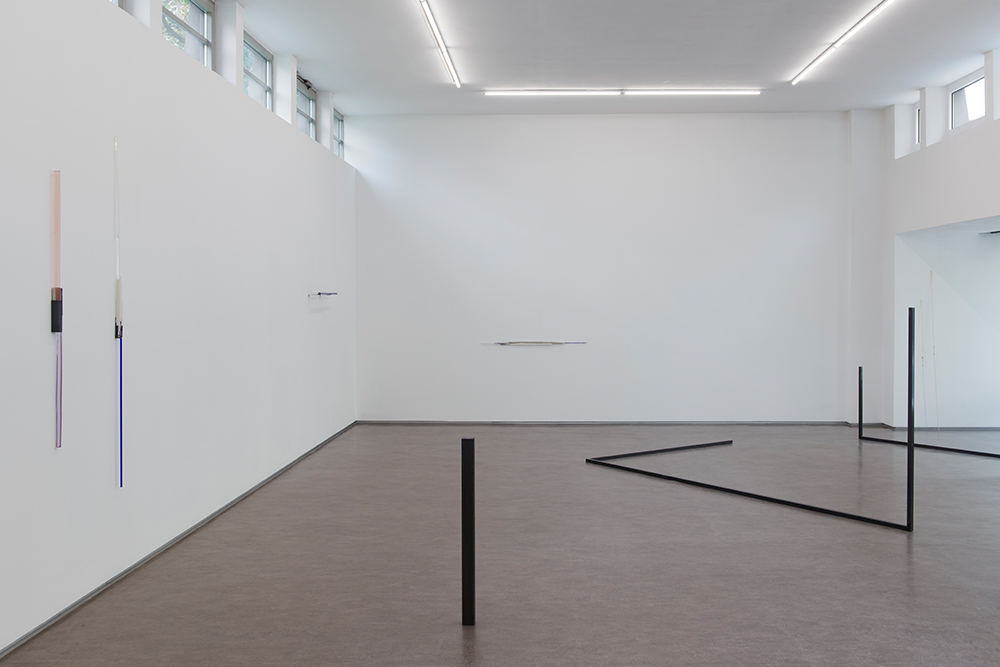
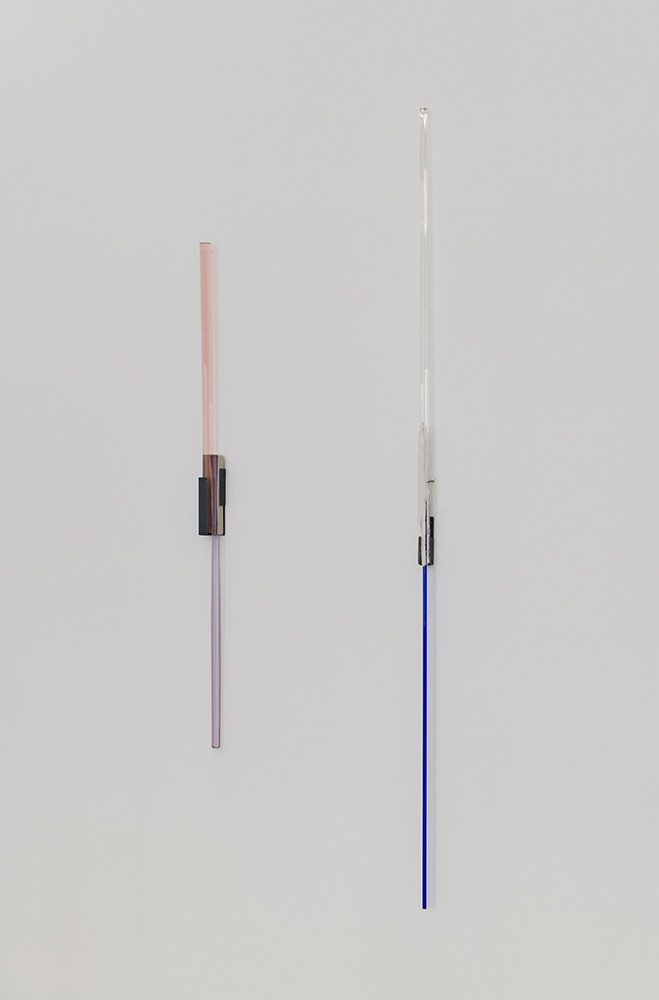
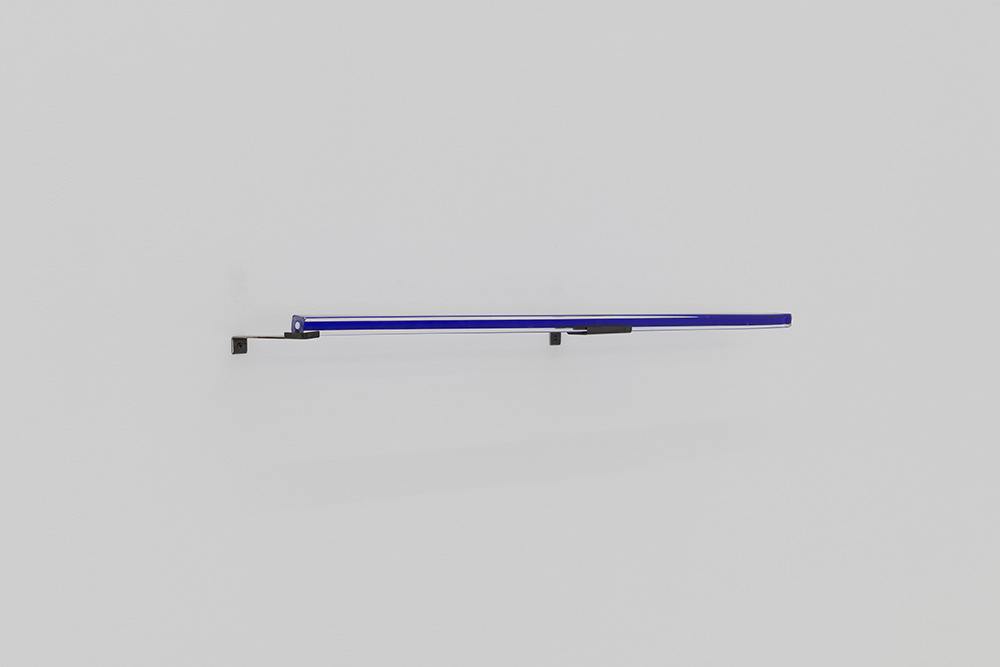
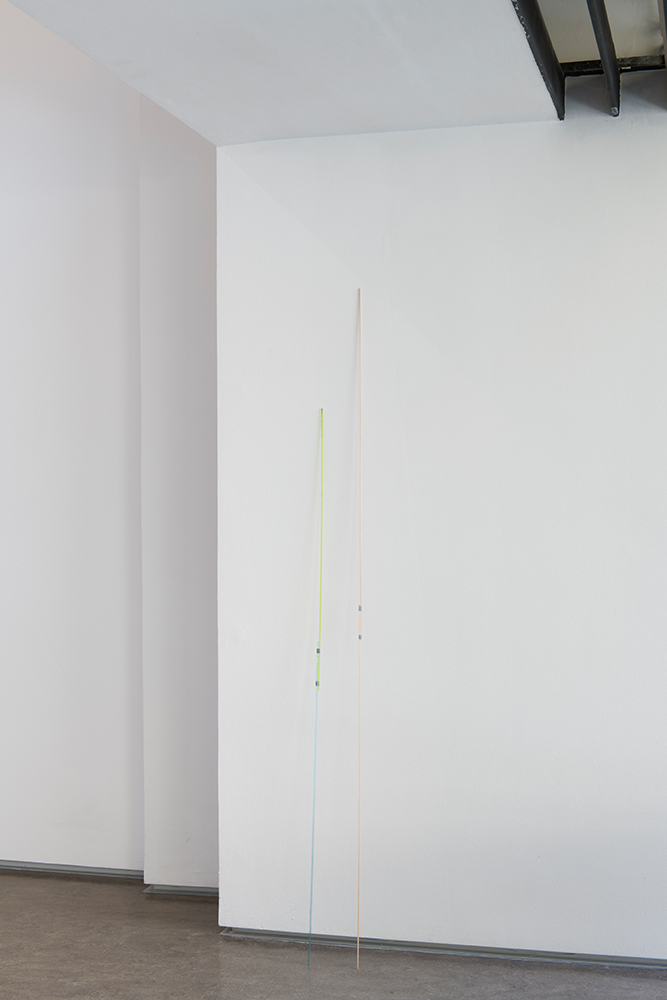
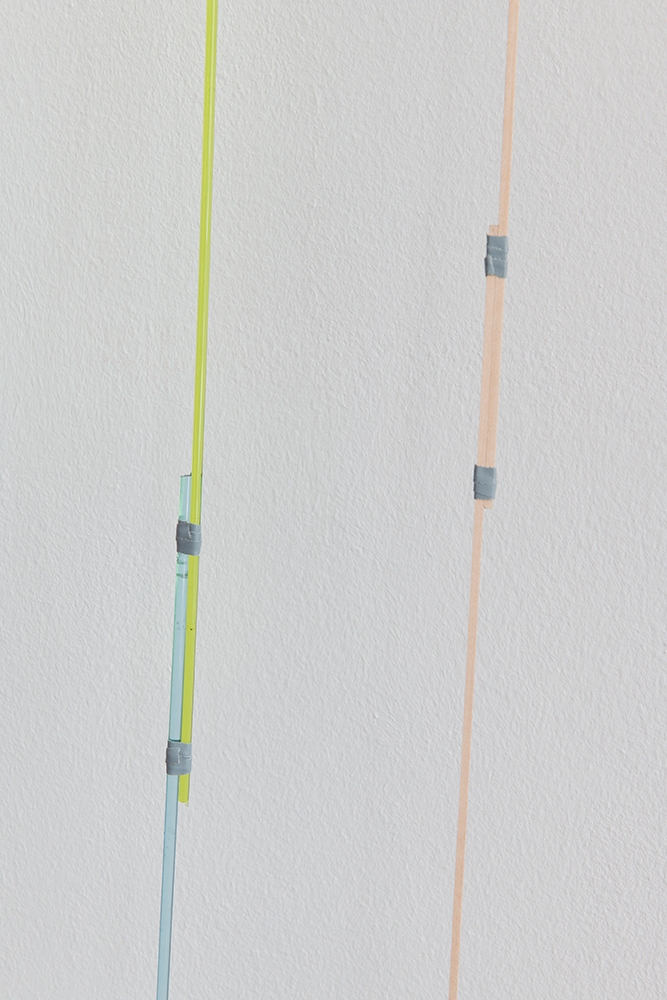
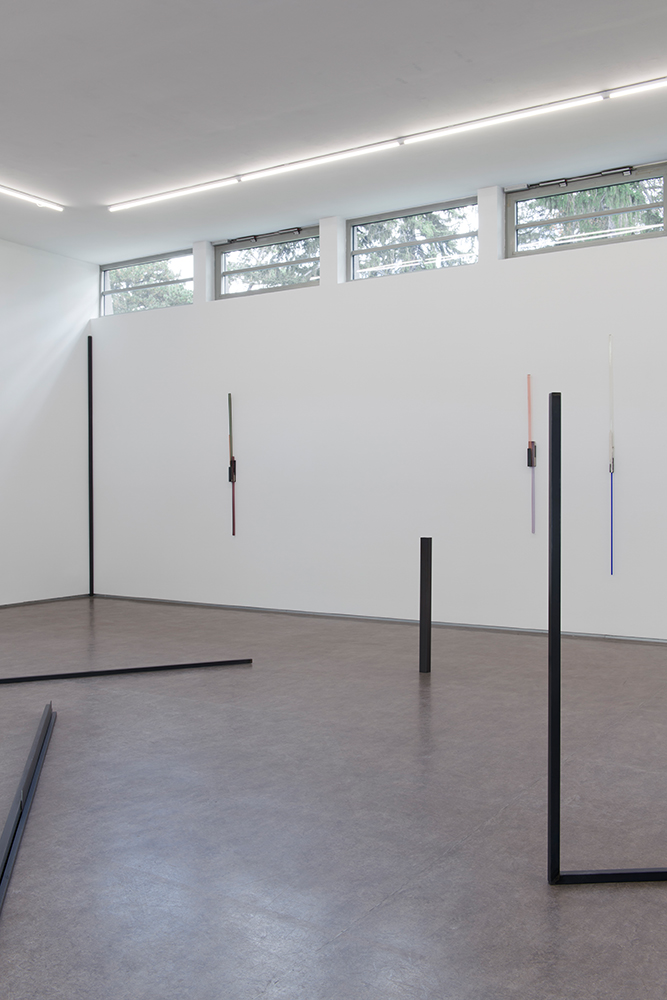
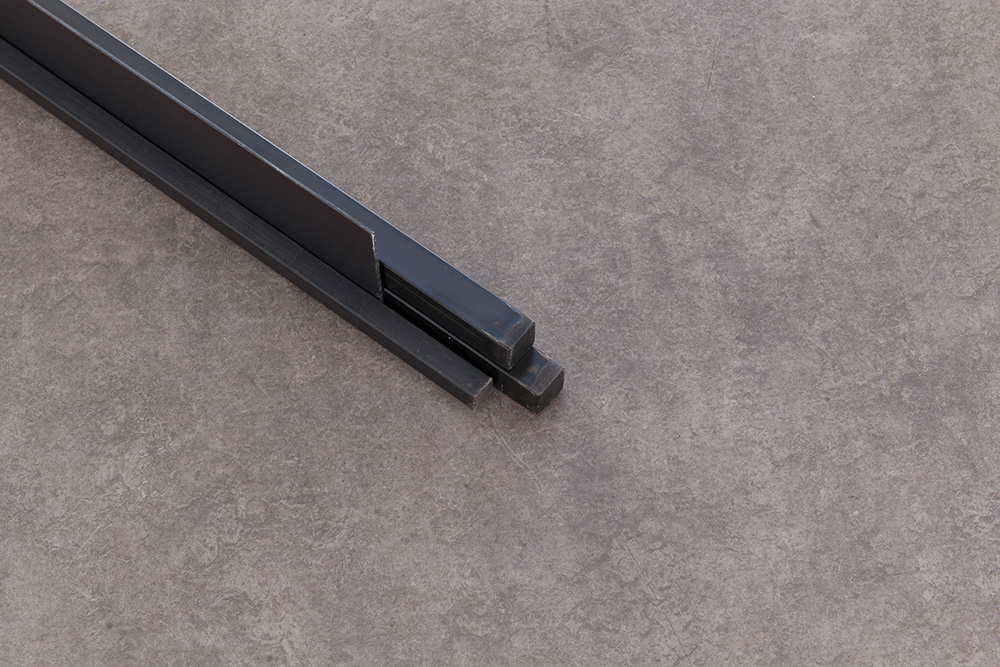
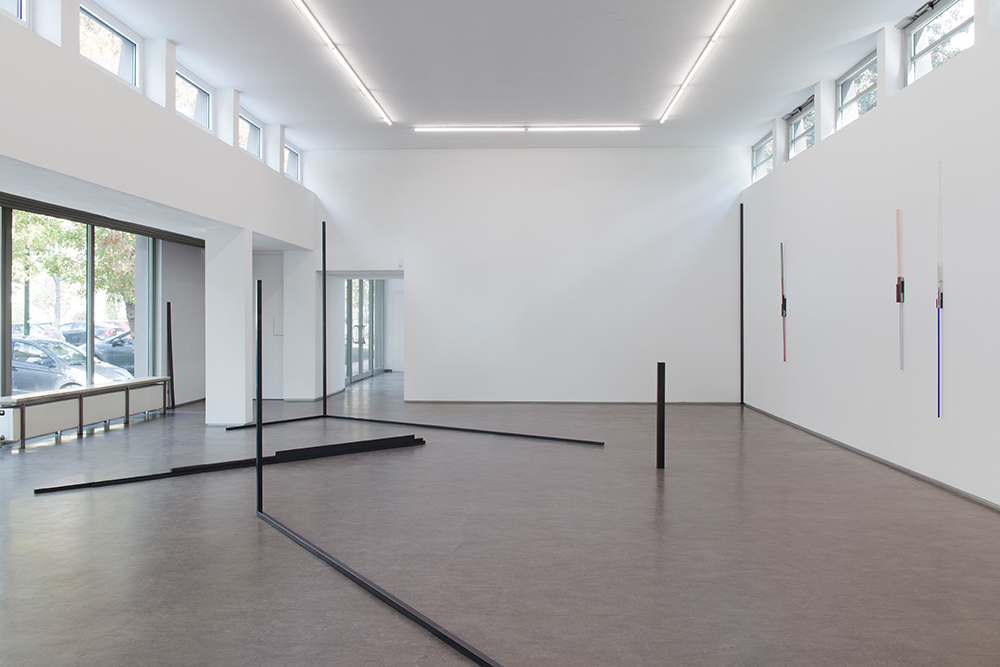
Exhibition view Recursive, Alice Cattaneo; Galerie Stadtpark, 2020; Photo: Stefan Lux; Alice Cattaneo; Recursive, spatial sculpture; Iron, Murano glass, cement, glass fibre reinforced plasterboard,; plaster, tissue paper, aluminium, balsa wood, adhesive tape
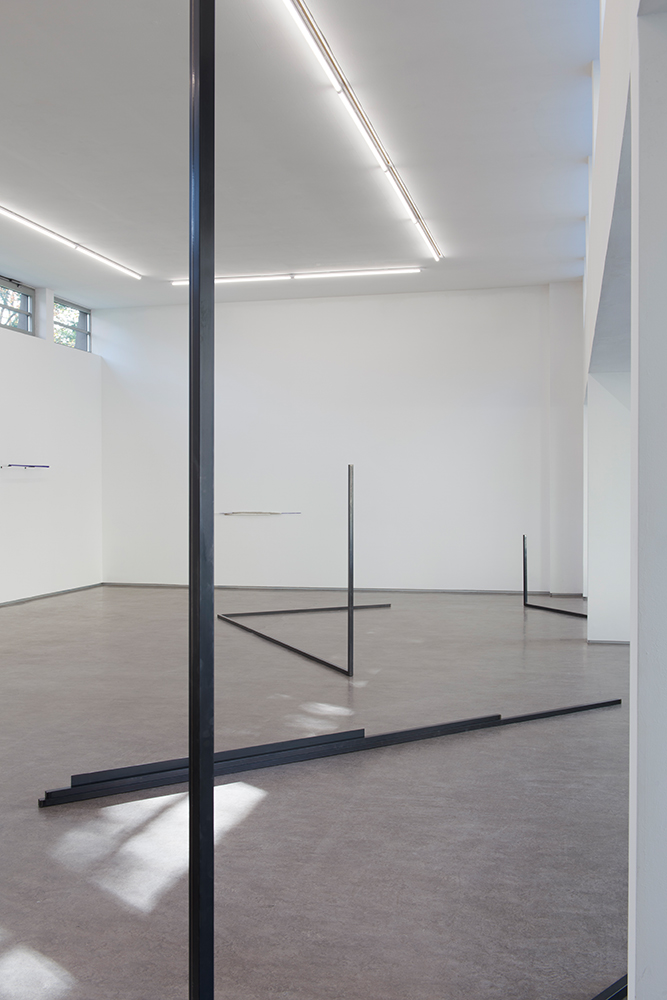
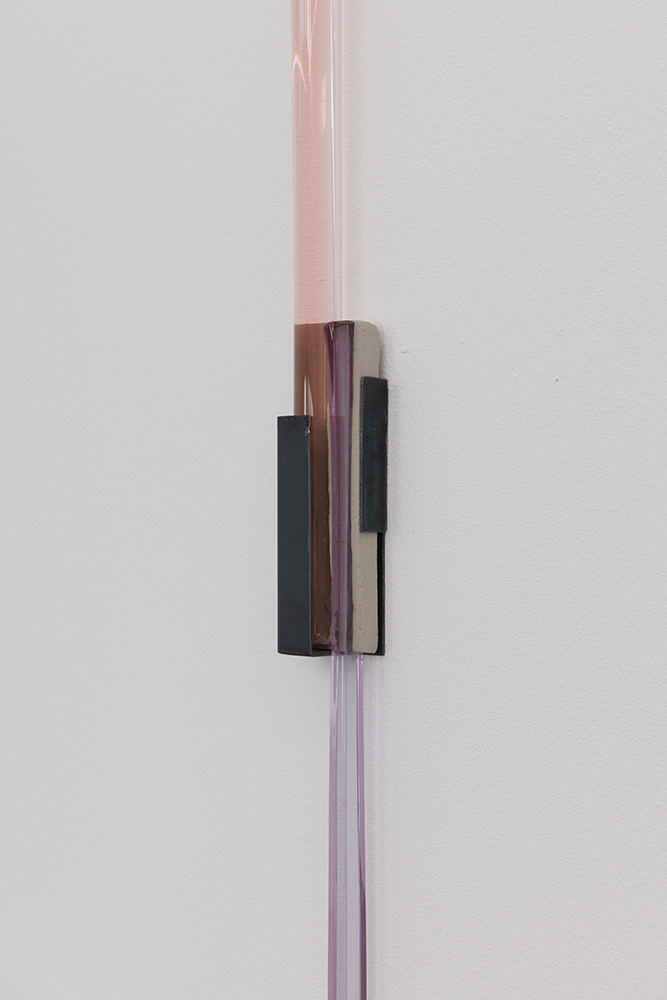
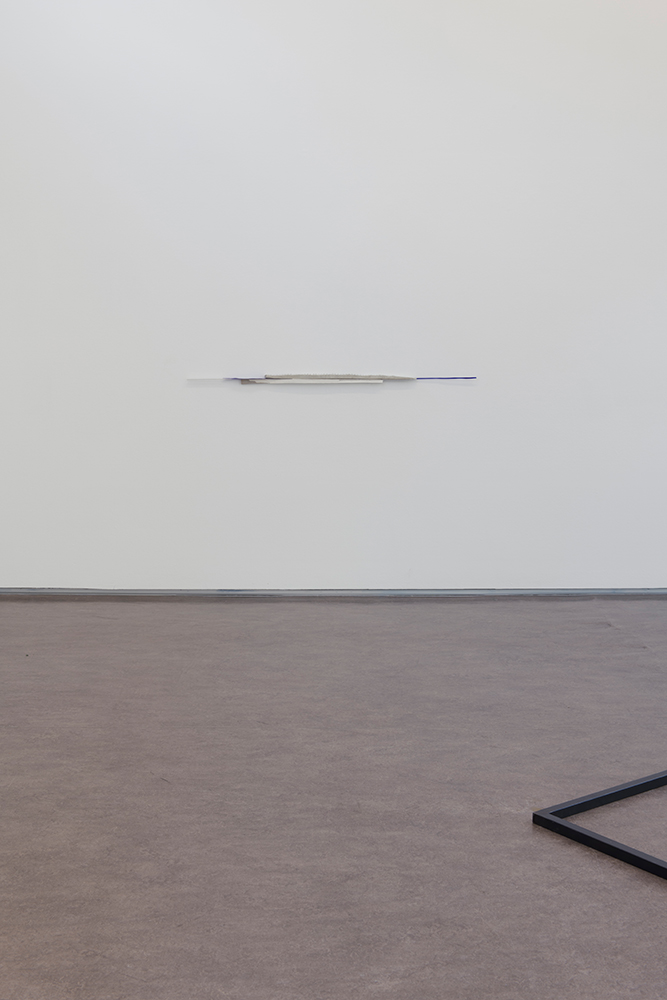
Exhibition view Recursive, Alice Cattaneo; Galerie Sqtadtpark, 2020; Photo: Stefan Lux; Alice Cattaneo; Recursive, spatial sculpture; Iron, Murano glass, cement, glass fibre reinforced plasterboard,; plaster, tissue paper, aluminium, balsa wood, adhesive tape
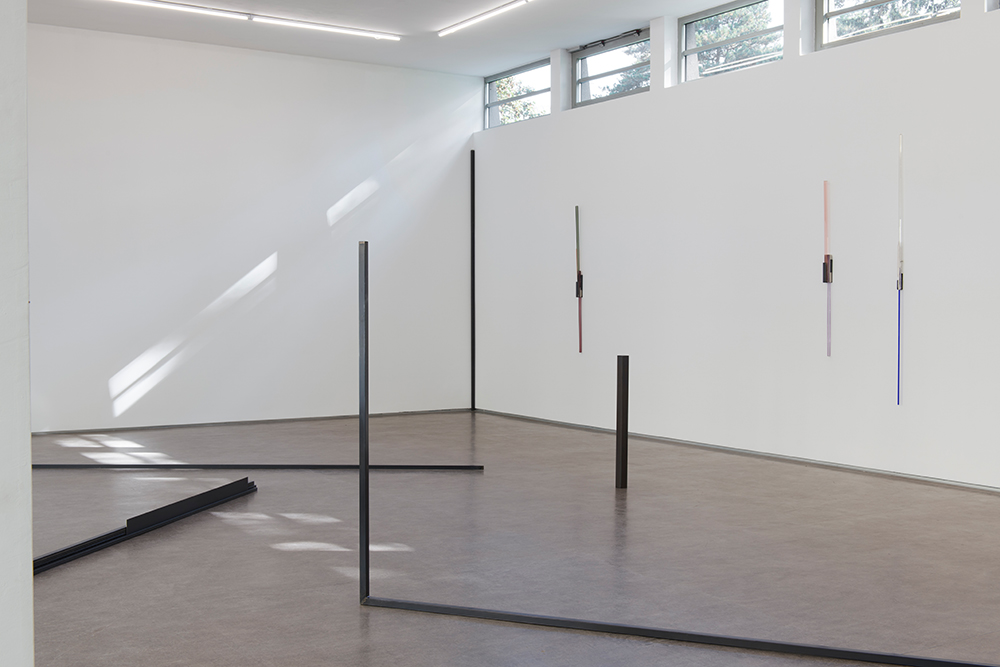
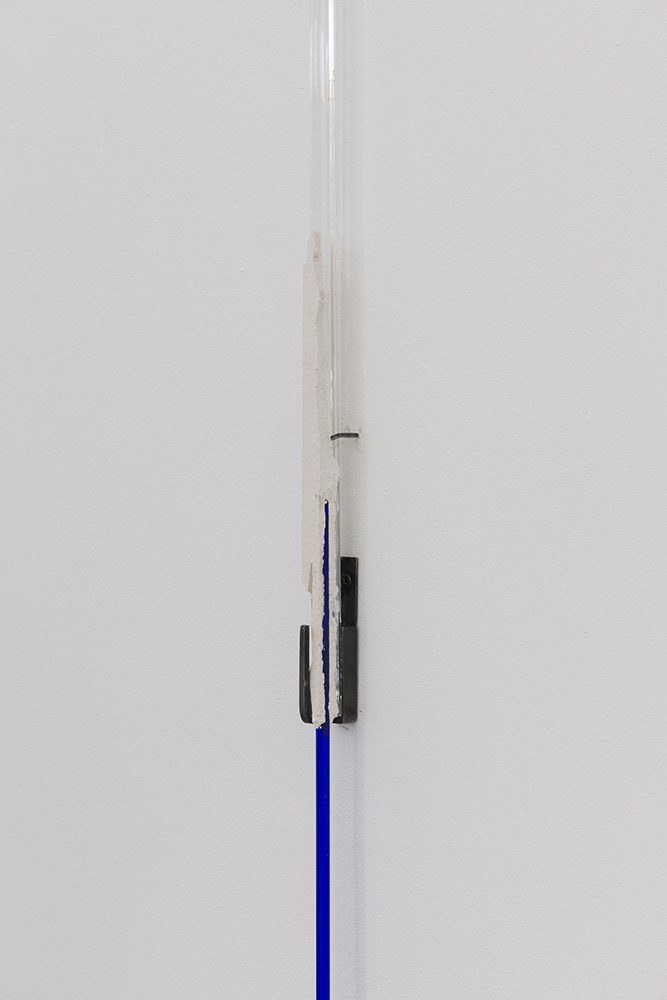
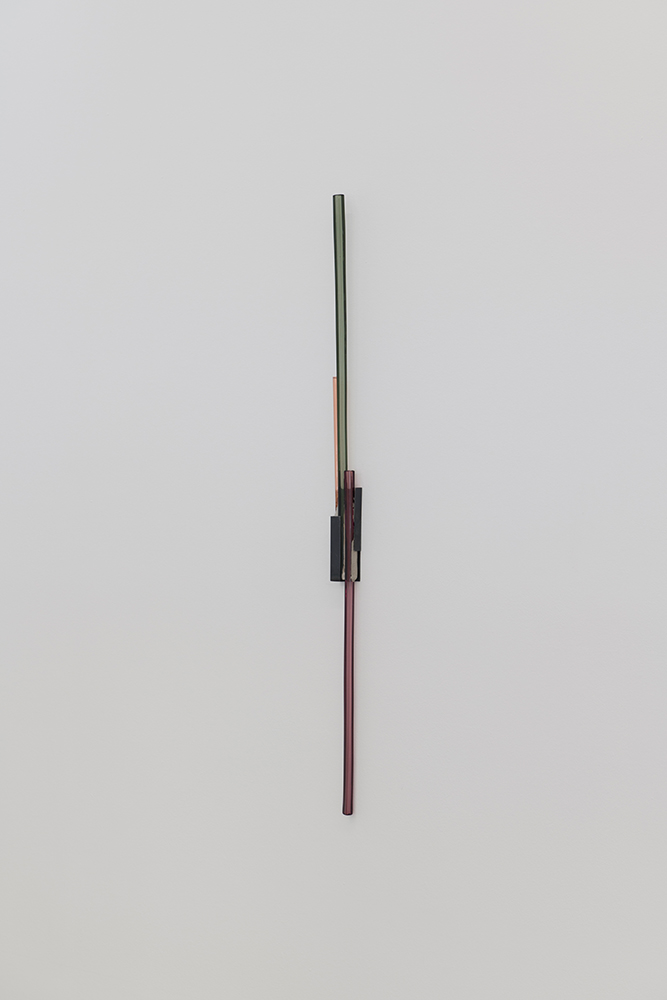
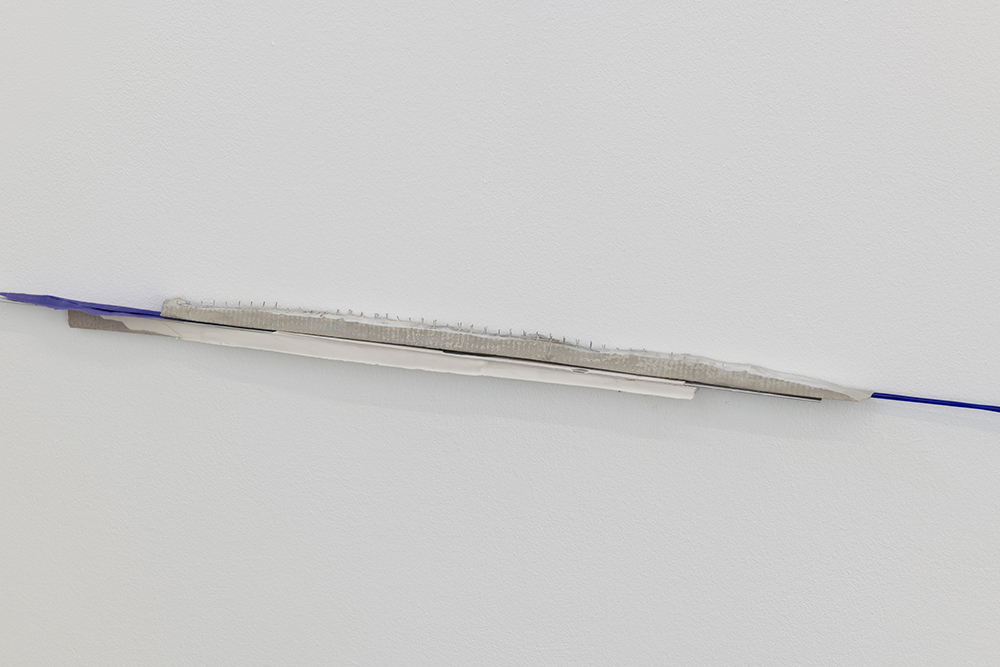
Exhibition view Recursive, Alice Cattaneo; Galerie Stadtpark, 2020; Photo: Stefan Lux; Alice Cattaneo; Recursive, spatial sculpture; Iron, Murano glass, cement, glass fibre reinforced plasterboard,; plaster, tissue paper, aluminium, balsa wood, adhesive tape
Legende

More and more I consider my work as classic traditional sculpture.
Alice Cattaneo

 
In Recursive, Alice Cattaneo creates a configuration of sculptural entities that she prefers to be viewed not as installation but as spatial sculpture. Influenced by the English-speaking artworld of the 2000s and its questioning of classic work concepts such as painting and sculpture, her earlier works exhibit deconstructive features and were invariably presented as installations. In recent years the artist has freed herself from this influence and references her own cultural roots with increasing frequency. “Coming from Italy you have this strong artistic tradition, you cannot avoid tradition, you cannot avoid form.” Cattaneo's work has evolved more and more towards a classical understanding of sculpture. Accordingly, elementary sculptural questions, such as verticality, the horizon, weight or lightness, are defining and perpetual figures of reflection for the artist’s working process.

Cattaneo’s works are defined by oppositions of material languages and morphologies, embodying dichotomies and antagonisms. Her sculptures are neither distinct configurations nor delicate, mobile-like formations; they are instead precise articulations and precarious forms. The sculptures thus convey a state of suspense, but also of tension between poles, as if mediating between both, without simply balancing these out or appeasing them.

Cattaneo’s individual works are often characterized by a combination of disparate materials. In a number of works presented in the Recursive exhibition, high and low, metal and glass (elaborately handcrafted, colored Murano glass) form oppositional poles of material language. Glass is used as a sculptural material less for its aesthetics and visual appearance than for its “intensity,” its special spatial denseness and presence. Cattaneo seeks to place oppositional materials in relationship to one another and to establish a connection that often proves to be quite pointed and fragile. Cattaneo tries to keep her objects simple, but also to make them dense and complex. Despite or precisely because of their simplicity, her objects take on a special perceptual complexity and stringency. Details are highly important. Points of contact, connections, and interfaces between various materials acquire their own meaning and performance. For instance, the artist uses cement as binding material to connect together two hand-blown, glass rods of varying hues; although certainly strong and solid, it looks extremely fragile and brittle. Thinner glass rods, leaning against the edge of the front wall in a somewhat peripheral area of the exhibition space, are only joined together by thin strips of adhesive tape.

Despite their fragility, verticals of varyingly hued Murano glass rods recall markings in space or inflection points that disrupt the apparent emptiness of the exhibition space. Their status as sculpture alternates latently between visual impression and spatial manifestation, what’s created, the sculptural. From a distance the objects appear very precisely arranged and almost perfectly geometric; up close they invariably reveal the signatures of their creational processes and point out the essential link between the hand and space/sculpture and observation. “Certain things come from making,” says Cattaneo. With Cattaneo, aesthetic decisions are therefore rarely conceptual in nature; they do not precede the work, but rather occur during the act of making, during the process. The hand itself, i.e. decisions concerning how materials are handled, plays a decisive role in the development of the works as well as in the artist’s overall thinking. Often semi-conscious and contingent decisions are to be “discovered.” These decisions are by no means easy to make. Finding the right balance, a cohesive and yet stimulating combination of oppositional materials, is instead a process of reduction geared toward creating a density of materials; a process that takes into account both the sculptural configuration and the spatial-relational composition. The work should function on its own, autonomously, but also within the particular spatial, inter-sculptural relationships. This dual status, i.e. spatial communication between works that are also individual and autonomous, forms an essential kinesthetic and presentational aspect of Cattaneo's work.

In Recursive, Cattaeno presents five, vertical, medium-format works on the walls of the exhibition space; in two places there appears to be pairs of two verticals each. The verticals consist of two glass rods joined together with cement and affixed to the wall on a kind of metal profile. Two horizontal works, by contrast, share an iconic blue as a common feature. Beyond evoking the color scheme of the glass, the gallery floor and the linear-constructive, spatial-sculptural events arranged there play a supporting role in the truest sense, one that grounds what is happening there. Positioned on the floor are a number of orthogonal structures welded from square metal shapes, each of which alludes to and demarcates a kind of space within the space, even if only briefly and incompletely. Several metal struts, at times grouped in loose pairs, counteract the grid-like evocation of space, allowing the metal squares to once again function materially as sculptural markings in the space.

Whereas the constructive-deconstructive occurrences on the floor seem to lean more towards a distinctly abstract conception of space, or a Euclidean notion of space as a homogeneous expanse, the wall works are more individual and anthropomorphic and seem focused exclusively on the present moment of perceiving. Here, too, Cattaneo makes use of an opposition since negotiating the relationships of various proportions and dynamics of horizontal and vertical that are seemingly happening mainly on the wall would be unthinkable minus the broken-up geometric occurrences on the floor, given how delicate and ephemeral they are. Although they relate to each other and make each other “legible,” wall and floor remain an inextricable opposition. The antagonism of abstract timelessness, embodied by the grid-like, abstract nature of the floor space, and the immediate, sensual, sculptural experience of the wall works create a perceptual but also spatial-epistemological field of tension that seeks to challenge and activate the viewer as a creator of space.

Cattaneo works with materials that, in a certain way, condense time themselves. Whether wood (natural growth) or glass (time-consuming manual production), both materials can in themselves be read as condensed time. With Cattaneo, to only speak of material and sculptural qualities spatially would not go far enough. Rather, her concept of sculpture is always constituted and articulated in terms of space and time. Her sculptures can be viewed as hinges between the spatial and the temporal; they make tangible the fundamentally reciprocal relationship of space and time as a basic condition of our perception. This is where Cattaneo’s works have a deeply philosophical dimension; they cannot be reduced to merely formal, compositional, and design aspects. Rather, Cattaeno works on the idea of space and time itself, and does so with radically simple, spatial, and process-based means.

Cattaeno’s conception of sculpture and space cannot be separated from temporal, process-based, and perceptual dimensions. The works are not interested in just being viewed and categorized—if this were so they would just be positioned one after the other, each for themselves, and would, in a best-case scenario, be viewed in sequence. Rather, Cattaeno’s sculptural “protagonists” want to be situated in relationship to one another, i.e. their differences compared and perceived. Evolving out of these impressions of displacement and recursion, analogies and differentiation, is an immaterial and situational spatial sculpture. Paradoxically, the spatial void plays as much of an active and formative role here as the actual material articulations and configurations. The artist works intensely on achieving the right balance and dynamics between the works; the choreography of the distances between works is not based on stylistic principles, but serves to provoke attention, a kind of bundling and consolidating of perception at individual “points” in the room. These moments of heightened perception coincide with the positions of the individual works or, to put it another way, they develop within them so that the viewer experiences them as an accumulation and culmination of sensory perception and not merely as a simple presence.

Cattaneo’s works often appear fragmentary, but, contrary to their ostensible lightness and fragility, develop a spatial effect that is not articulated via size or power, but through aesthetic bundling, consolidation, and concentration. The spatial void she consciously works with is made tangible in its purest form with the help of actually minute and subtle markings (glass-rod structures)—contrary to the idea of space as an abstract expanse. Viewers are subtly reminded that they are the ones who create these perceptual consolidations, that they aid the works in achieving a perceptual density and presence. It is not the work that creates the space here, but the act of perceiving itself. The perceptual immediacy of the work in perceiving it produces the sense of coherence and sculptural intensity Cattaneo seeks.

Whereas Cattaeno sought to undermine or subvert space in earlier works, this interest has in recent years given way to a notion of “stable space.” This is about being and remaining in space, making it accessible, not deconstructing it. Cattaneo sees her work as entirely hermetic, as self-referential, but only insofar as she uses her own forms as points of reference for other works. She is not interested in repetition per se, in systemic aspects, or even in autopoiesis, but in ruptures in the system, the demarcating of spatial condensings and configurations. Individual works do not function as fragments or parts of a structure or system, but as independent entities, each claiming their own present moment, while provoking at the same time a kind of dialogue within the constellation of other sculptures in the space via their aesthetic openness and polysemantic sculptural qualities. The viewer moves between works along a kind of invisible path that allows a to-and-fro, back-and-forth movement. This leads to comparisons, but also recourses (recursions), which in turn play a role in the process of perception. Impressions of current perceptions and memories (mental images of what has been seen before) are not only compared and related to one another, but merge imperceptibly into one another. Within this inter-sculptural occurrence of variances, space is not deconstructed, but a linear concept of time and perception is undermined.

In her work, Cattaneo tries to wrest meaning from empty space, to connect what is separate, that is, to create relationships. She looks for connection points and points between various materials in contact, but also for a-visual connections, i.e. cognitive links between works spanning the gaps and intermediary spaces. In this respect, Cattaneo’s works conceal a quality that transcends space—as well as empty space and absence—without ending in deconstruction. Void and profusion, manifest and ephemeral, stability and fragility remain present with their qualities and modalities of being. Cattaeno puts these various contradictory characteristics up for discussion, makes them visible and tangible as independent qualities, but also leads us to consider these categories and their incommensurability on an abstract level. In this regard, her works do not simply generate associations to landscape or the natural world, but instead give form to cognitive spaces, cognitive landscapes. Cattaneo’s sculptural structures condense into a spatial sculpture with its own highly ephemeral and immaterial status. The spatial sculpture in Recursive can perhaps be described as a space of ideas, as a “space of thinking and of thought,” as Cattaneo puts it, a space for thinking that means not just abstract thinking, but thinking based on and which remains connected to sensory, perceptual aspects and an intentionally aesthetic way of experiencing space.
 
Text: David Komary
Translation: Eric Smith
 
top


Alice Cattaneo

alicecattaneo.it

1976
born in Milan, Italy; lives and works in Milan

Selected solo exhibtions

2019
The Image in the Hand, curated by Chiara Bertola, MLF Marie-Laure Fleisch Gallery, Brussels
Un dialogo, Museo Archeologico di Acqui Terme

2018
Mettere un mare nella nebbia, Museo del Novecento, Milan
MLF Marie-Laure Fleisch Gallery, Brussels

2017
Alice Cattaneo, Michael Höpfner, two-person show, Galerie Hubert Winter, Vienna

2016
Un qui puntiforme unitissimo, Galleria Collicaligreggi, Catania

2015
Tensioni e-statiche, two-person show with Hilla Ben Ari, Galleria Marie-Laure Fleisch, Rome
Assonometrie, two-person show with Antonio Catelani, Rizzuto Gallery, Palermo
Col fiato sospeso per circa due ore, La Quarta Vetrina, curated by Francesca Pasini, Libreria delle Donne, Milan

2013
Nothing quite flat and more round, Romer Young Gallery, San Francisco

2012
Contrapositive, two-person Exhibition with Fred Sandback, curated by David Komary, Galerie Stadtpark, Krems

2011
Galleria Suzy Shammah, Milan

2009
Premio NY Exhibition, International Studio and Curatorial Program, New York (with S.Arancio)

2008
Galleria Suzy Shammah, Milan
MADRE Museo d' Arte Contemporanea Donna Regina, Naples, curated by Jonathan Watkins

2007
Ikon Gallery, Birmingham, curated by Jonathan Watkins
Special Project, Art Forum Berlin

2006
Analix Forever, Geneva

2005
Galleria Suzy Shammah, Milan
Micro-Macro, a cura di E. DiRaddo, Tufano Studio25, Milan
c/o Careof, Fabbrica del Vapore, Milan

2004
Concrete Particularities, Mission17, San Francisco

Selected group exhibitions


2019
Negative Space. Trajectories of Sculture, curated by P. Weibel, D. Mille and A. Holzheid, ZKM | Center for Art and Media, Karlsruhe
Vetrine di Liberta’, curated by F.Pasini, Fabbrica del Vapore, Milan

2018
La vita materiale. Otto stanze, otto storie, curated by M.Dacci, Palazzo da Mosto, Reggio Emilia
Equilibrium. Un’idea per la scultura italiana, curated by G.Verzotti, Galleria Mazzoleni, Torino

2017
Combining Materials, Rosenfeld Porcini Gallery, London
Eremi Arte 2017, in collaboration with Accademia di Belle Arti L’Aquila, Madonna del Cauto, Morino, L’Aquila
Floating World, curated by J.Watkins and A.Hicks, Art Bahrain Across Borders, Bahrain International Exhibition Center, Manama
Solo Figli, curated by S.Avveduti, I.Guzman, Padiglione de L’Esprit Nouveau, Bologna
Premio Fondazione VAF, Kunstsammlungen Chemnitz, Chemnitz, DE

2016
Tempo e Dettagli / Times and Details, Artisti/Artigiani/Carlo Scarpa, curated by C.Bertola and G.Blais, Officina Zanon, Falegnameria
Capovilla, Aula Mario Baratto Universita’ Ca’ Foscari, Venice
La PELLE, by Fondaco, hosted by Officina, Brussels
Premio Fondazione VAF, Macro Testaccio, Rome; Stadtgalerie Kiel, Kiel, DE
Lifting the Veil - 11 International Female Artists, Rosenfeld Porcini Gallery, London
Linea del Tempo Annodata, Milano Studi Festival, Corso di Porta Vigentina 34, Milan

2015
Chaotic Passion, curated by A.Lovecchio e CHAN, Museo d’Arte Contemporanea di Villa Croce, Genoa
CArD in citta’, Percorsi d’arte tra passato e presente, curated by P. Baldacci, D. Volpi, Antiquarium Santa Margherita, Piacenza
Moroso Concept for Contemporary Art, curated by A. Bruciati, Villa Manin, Passariano, Udine

2014
CArD Contemporary Art & Design, curated by P.Baldacci, D. Volpi, C. Baldacci, Pianello, Val Tidone, Piacenza
Ritratto dell’Artista da Giovane, curated by M.Beccaria, Castello di Rivoli, Rivoli (TO)
Equilibri, curated by L.Cherubini e E.Fiorentini, Galleria Erica Fiorentini, Rome
Non-Profit & Profit, Galleria SpazioA, Pistoia

2013
Autoritratti. Iscrizioni del Femminile nell’Arte Italiana Contemporanea, section curated by F. Pasini, MAMBO, Museo d’Arte
Moderna, Bologna
Arte in memoria, cuared by A.Zevi, Sinagoga di Ostia Antica, Rome

2012
Performing Structures, curated by S.Simoncelli, Wascherei Kunstverein, Zurich
The Unseen, The Fourth Guangzhou Triennial, curated by J.Watkins, Guangdong Museum of Art, Guangzhou
Periplo della Scultura Italiana Contemporanea 3, curated by G.Appella, MUSMA, Matera
Collaboration, curated by San Rocco Magazine, 13. Biennal of Architecture, Venice
Segni e (non) sogni. Sperimentalismi e astrazioni, ieri e oggi, curated by G. Verzotti, MiArt, Milan
Italian Genius Now, curated by M. Bazzini - Centro per l’arte contemporanea Luigi Pecci, Prato/
Santander Cultural, Porto Alegre Rio Grande do Sul, Brasil
Ceci n’est Pas du Cinema! Rivoli al Cinema, curated by M.Beccaria, Cinema Massimo, Turin

2011
Arte essenziale, a project of F.Ferrari, Collezione Maramotti, Reggio Emilia; Frankfurter Kunstverein, Frankfurt
Biennale Giovani Monza, Villa Reale, Monza

2010
La scultura Italiana del XXI Secolo, curated by M.Meneguzzo, F.Pomodoro, Milan
Terre Vulnerabilli, curated by C.Bertola with A.Lissoni, Hangar Bicocca, Milan
Roaming. Heterotopias, curated by A.Castiglioni, Musée Cantonal des Beaux-Arts, Losanne
Negotiations - The Second Today’s Documents 2010, curated by J.Watkins, Today Art Museum, Beijing
Italian Genius – Casa Dolce Casa, curated by M.Bazzini, Centro per l’Arte Contemporanea Luigi Pecci, Expo Shangai;
Kaohsiung Museum of Fine Arts,Taiwan; Taichung Creative and Cultural Park, Taiwan
L’elogio della Semplicita’- Un carattere dell’Arte Contemporanea, curated by G.Verzotti, Palazzo delle Stelline, Milan

2009
Project room, Galerie Christine Koenig, Vienna
Projector, a cura di L.Welch and A.Bellaran, FOUR, Dublin
Lago Film Fest, Revine Lago (TV)
New Italian Epic, curated by A. Bruciati, Brown Project Space, Milan
Emerging Talents, Nuova Arte Italiana, curated by F.Nori, Strozzina CCC, Palazzo Strozzi, Florence

2008
Italics, Italian Art between Tradition and Revolution, 1968-2008, curated by F.Bonami, Palazzo Grassi, Venice
3rd Biennial of Young Artists, curated by Ami Barak, Bucharest, Romania
Soft Cell: dinamiche nello spazio in Italia, curated by A. Bruciati, GC.AC, Monfalcone (GO)
XV Quadriennale di Roma, curated by di C. Bertola, L. Canova, B. Corà, D. Lancioni, L. Canova, Palazzo delle Esposizioni,
Rome
VIDEO.IT, curated by F.Poli, F.Bernardelli, M.Gorni, S.Lacagnina, Accademia Albertina, Turin
Sporgersi Prego, Galerie Lange und Pult, Zurich
   
top